Monday, August 23, 2010

Money World's richest 1% own 40% of all wealth, UN report discovers


· First ever study of global household assets
· 50% of world's adults own just 1% of the wealth


Slum, Nairobi
Children playing in Kibera, Africa's biggest slum. Global levels of inequality are 'grotesque', Oxfam says. Photograph: David Levene

The richest 1% of adults in the world own 40% of the planet's wealth, according to the largest study yet of wealth distribution. The report also finds that those in financial services and the internet sectors predominate among the super rich.

Europe, the US and some Asia Pacific nations account for most of the extremely wealthy. More than a third live in the US. Japan accounts for 27% of the total, the UK for 6% and France for 5%.

The UK is also third in terms of per capita wealth. UK residents are found to have on average $127,000 (£64,000) each in assets, with Japanese and American citizens having, respectively, $181,000 and $144,000. All data relate to the year 2000.

The global study - from the World Institute for Development Economics Research of the United Nations - is the first to chart wealth distribution in every country as opposed to just income, for which more comprehensive date is available. It included all the most significant components of household wealth, including financial assets and debts, land, buildings and other tangible property. Together these total $125 trillion globally.

Anthony Shorrocks, director of the research institute at the United Nations University, in New York, led the study. He affirmed that the existence of a nest egg provided an insurance policy that helped people cope with unforeseen events such as ill health or a lost job. Capital allowed people to drag themselves out of poverty, he added. "In some ways, wealth is more important to people in poorer countries than in richer countries." It was more difficult in developing countries to set up a business because it was harder to borrow start-up funds, he said.

His team used detailed data from 38 countries, but had to rely on incomplete information from the rest.

The report found the richest 10% of adults accounted for 85% of the world total of global assets. Half the world's adult population, however, owned barely 1% of global wealth. Near the bottom of the list were India, with per capita wealth of $1,100, and Indonesia with assets per head of $1,400.

Many African nations as well as North Korea and the poorer Asia Pacific nations were places where the worst off lived.

"These levels of inequality are grotesque," said Duncan Green, head of research at Oxfam. "It is impossible to justify such vast wealth when 800 million people go to bed hungry every night. The good news is that redistribution would only have to be relatively small. Such are the vast assets of the rich that giving up a small part of their wealth could transform the lives of millions."

Madsen Pirie, director of the Adam Smith Institute, a free-market thinktank, disagreed that distribution of global wealth was unfair. He said: "The implicit assumption behind this is that there is a supply of wealth in the world and some people have too much of that supply. In fact wealth is a dynamic, it is constantly created. We should not be asking who in the past has created wealth and how can we get it off them." He said that instead the question should be how more and more people could create wealth.

Ruth Lea, director of the Centre for Policy Studies, a thinkthank set up by Margaret Thatcher, said that although she supported the goal of making poverty history she did not think increasing aid to poorer countries was the answer. "It's no use throwing lots of aid at countries that are basically dysfunctional," she said.

The UN report was issued as the Swiss magazine Bilan released a list of the richest Swiss residents. Ingvar Kamprad, the founder of Ikea, topped the list with an estimated fortune of $21bn.

Sunday, August 22, 2010

Faking An Ecounter: Killing the Peace Process


SANHATI


Preliminary Report of the All India Fact Finding Team on the Killing of Azad and H. C PandeyReleased to the media at Hyderabad on 22 August, 2010

by COORDINATION OF DEMOCRATIC RIGHTS ORGANIZATIONS

CDRO put together a team of concerned citizens consisting of Prof. Emeritus Amit Bahaduri, J.N.U., Delhi, Senior Counsel of Supreme Court Mr. Prashant Bhushan, Kavita Srivatsava, Human Rights worker from Rajasthan, Gautam Navlakha writer & from PUDR, Delhi, Kranthi Chaitanya, Advocate and General Secretary of APCLC, D. Suresh Kumar, Advocate, APCLC, Ch. Sudhakar Rao, President of OPDR, D. Venkateswarlu, OPDR. The team visited Wankadi Mandal, Adilabad District on 20th & 21st of August, 2010 where the alleged encounter of Mr. Azad @ Cherukuri Rajkumar who was spokesperson of CPI Maoist Central Committee Member and Journalist Hemachandra Pandey took place on the intervening night of 1st and 2nd July, 2010. Three fact findings had earlier already carried out spot investigations. The team met the local villagers, local police, and local media personal and perused FIR, inquest and postmortem report. The FIR No.(Crime ) 40/2010 registered at the Wankadi P.S. of Adilabad District by the Station House Officer, Mr. Mansoor Ahmed at 9.30 am of 2nd July, 2010 in the English Language gives the following account.

1. The Spl. Intelligence police provided the information that a group of 20 CPI Maoist had crossed into A.P. from Maharastra and moving about the forest.

2.The police attached to Asifabad P.S. along with Spl. Party police, equipped with “night vision device” went to search for them and found them between Tarkepalli and Welgi Forest Hillock.

3. On being intercepted the Maoist opened fire and the police also fired in self defence. The firing lasted for 30 minutes after which the police climbed the Hill top and halted there for the night. Next morning during the search they found two unidentified bodies one with AK -47 Rifle lying next to a 50 years old man and the other 30 years old “wearing sandals” with 9 mm pistol. This story raises several questions.

a. How were the police able to pin point the location of the Maoists in a forest several hundred square kms along with the border of A.P. and Maharastra ?

b. Why did the police plan this location? As the villagers clearly told us that therein recent years there had been no Maoist activity in the region.

c. Despite 30 minutes, from 11 pm to 11.30 pm, of firing not a single police personal suffered any injury, whereas only Azad and Hemachandra Pandey are killed.

d. If there were twenty Maoists as stated in the FIR, howcome, the police found only 2 kit bags and two weapons? In any escapade there would be more belongings left behind.

e. If Azad was traveling with a dhalam of 20 Maoists then surely he too would have been in Olive Green dress rather than in civilian dress.

f. If the police were unaware of the identities of the two deceased upto 9.30am at the time of filing the FIR, then how did the electronic media learned by 6.00am on 2nd July that Azad had been killed in an encounter. Several electronic media channels has also announced his death. So it clearly, shows that the police knew who they had killed.

g. Overwhelming doubt about the police version is raised by the postmortem report of Azad which shows that the fatal bullet entry wound from the chest “at the left 2nd intercestal space” had “darkening burnt edges”. The burnt mark at the entry wound are a clear indication of a bullet being fired from a very close range (no more than a foot). The corresponding exit wound is at the 9th & 10th inter vertebral space and depth is 9 inches. That means the bullet entered from upper chest and traveled downwards. This questions the police version that Maoist were on the top of the hill and they were below.

It was widely known and reported that the Union Ministry of Home Affairs, through Swami Agnivesh was engaged in exploring the possibility of a dialogue with C.P.I. Maoist and the person with whom Swami Agnivesh was talking with CPI Maoists was Cherukuri Rajkumar @ Azad.

5. The alleged encounter in these circumstances and such a time raises important questions.

a) How could the Spl. Branch of A.P. Police dedicated to combating Maoists, murder Azad in this manner without knowledge of the Union Home Minister as well as the State Government particularly when the Union Home Ministry is said to be leading the joint offensive against the Maoists.

b) Why has the Union Home Ministry not interested in seeking an independent investigation/enquiry into the encounter, despite so many demands for the same.

c) If the Union Government was sincere in seeking a peace dialogue, it would have been natural for the Home Minister Mr. Chidambaram to express concern about the execution of the key actor from the Maoist side with whom he was exploring the peace dialogue. His explanation on the floor of the Parliament was that the enquiry is a State subject. This is unacceptable because the A.P. State Government is run by Congress Party and had the Union Home Minister sought an enquiry they could not have refused.

In any case the Central Government is empowered to constitute an enquiry under the Commission of Enquiries Act,1952.

DEMANDS:

1. In the light of the significance of the assassination, which has scuttled the peace process, it is imperative that the Government institute a high level independent enquiry headed by a Sitting/Retired Judge of the Supreme Court of India, nominated by the Chief Justice of India.

2. Register an FIR against the police who killed Mr. Azad and Hem Chandra Pandey and the case be independently investigated in accordance with the NHRC Guide Lines.

1. Prof. Emeritus Amit Bahaduri, 2. Mr. Prashant Bhushan, Senior Counsel Supreme Court of India. 3. Kavita Srivatsava, General Secretary of PUCL Rajasthan, 4. Gautam Navlakha, writer & PUDR, Delhi, 5. Kranthi Chaitanya, Advocate, General Secretary of APCLC, 6. Ch. Sudhakar Rao, President of OPDR, 7. D. Venkateswarlu, OPDR 8. D. Suresh Kumar, Advocate, APCLC,

Repression in India from West Bengal to Tamil Nadu, Amnesty International & PUDR statement


PUDR statement on the arrest of Naba Dutta

PUDR is outraged at the arrest of Naba Dutta of Nagarik Manch, an organization that has been working for over two decades, devoted to environmental and labour issues. The trumped up charges against him is yet another instance of the West Bengal state government deliberately targeting activists, civil liberties groups, media representatives…in order that truth about the actual happenings on the ground in Lalgarh area remain suppressed.

Naba Dutta along with his 3 companions; Progna Paromita Dutta Roy Chowdhury, Gautam Ghosh and Dipankar Mazumdar, are all members of Nagarik Mancha, an organization mainly focused on environmental and labor issues, attended a sit in, in front of the Block Development Officer’s office at Narayangarh block of West Midnapur. The programme was organized by Lodha Shabar Vumij Kalyan Smiti, whose patron is Mahashweta Devi. After the program when they were returning to Kolkata they were all detained by the police.

While driver of the vehicle and Naba Dutta’s three colleagues were later released the police proceeded to arrest Naba Datta and charge him among other things under Arms Act, S 307 (attempt to murder) 120 B of IPC, pretending that he was the mastermind of the incident in Jhargram where vehicles belonging to an illegal sponge iron mill were burnt on December 18, 2009. Significantly, in the past eight months, since the incident occurred, not once did the Jhargram police summon Naba Dutta, if they indeed have evidence in their possession to link him to the crime. Naba Dutta was not in Jhargam when the incident took place. And it is the CPI(Maoist) which carried out the act of arson, which they publicly declared to be a result of state government’s failure to take action against the owners of the illegal plant and its contractors. Nagrik Manch had filed a PIL in Kolkata high court against the illegal operations of the plant.

Although the magistrate has given him bail and also implied that the case looked implausible, we are alarmed that for West Bengal authorities filing a PIL against an illegal plant is akin to commission of a crime. We, therefore, appeal to saner elements in the administration to think of the consequences of suppressing dissent and legitimate activities in the name of emergency like situation.

Asish Gupta and Moushumi Basu

secretaries PUDR

New Delhi 18 August, 2010

India: Authorities in Tamil Nadu must release five activists campaigning against torture and drop false charges against them

Authorities in the southern Indian state of Tamil Nadu must release five arrested human rights defenders, drop the false charges against them and hold the state police accountable for harassment and intimidation, Amnesty International said today.

The five human rights defenders – Bharathi Pillai, Niharga Priya, Sudha, Gnana Diraviam and Anandan – who were part of a human rights training programme conducted by People’s Watch, Madurai, were arrested on the night of 15 August on false charges. They had gone to Veeravanallur police station for a fact-finding exercise as part of the field training programme to inquire about the lack of investigation in the torture of a Dalit youth, Suresh, allegedly by a police officer there. Earlier, they were detained at the police station for six hours.

The five activists have been charged with section 170 of the Indian Penal Code (impersonating a public servant), section 353 (assault or criminal force to deter public servant from discharge of his or her duty), section 416 (cheating by impersonation) and section 506 (criminal intimidation) and lodged in prison. The police also declared Henri Tiphagne, Director of People’s Watch, Madurai, as an “absconding offender” in the case. This was on the basis of a complaint from one of the police officials that the five activists, claiming to be public officials, had apparently tried to threaten them.

Fact-finding exercises are commonly held globally and in India, as a way of probing allegations of human rights violations and seeking accountability. There was no attempt by the fact-finding team to impersonate public officials and the team had informed the Veeravanallur police in advance about the purpose of its visit.

Amnesty International is concerned that the arrests and the filing of charges appear to be politically motivated, as a result of their work as defenders of human rights raising issues of torture and impunity. The police charges of impersonation against Henri Tiphagne and the five arrested human rights defenders appear to be an attempt to silence the victims of police torture by criminalizing a legitimate form of protest by human rights defenders.

Amnesty International calls on the Tamil Nadu government to:

· drop the false charges against the six human rights defenders and immediately release the five persons.

· hold the State police accountable for such harassment and intimidation and ensure an independent investigation into the allegations of torture by the police of the Dalit youth.

The Tamil Nadu authorities should also create an enabling environment and ensure respect for the rights of individuals in Tamil Nadu engaged in the peaceful promotion of respect for human rights, including the right to seek, obtain, receive and hold information about respect for human rights.

Public Document

For more information please call Amnesty International’s press office in London, UK, on

+44 20 7413 5566 or email: press

International Secretariat, Amnesty International, 1 Easton St., London WC1X 0DW, UK

www.amnesty.org

Karnataka Maoist Leader – Hosagadde Prabha Dead

There was a buzz of activity at the house of Hosagadde Prabha, a Naxal leader who carries a reward of Rs 5 lakh, in Hosagadde near Agumbe in Shimoga on Thursday following rumours of her death in a Bengaluru hospital. According to family sources, some unidentified people had sent Prabha’s mother a message that her daughter’s body will reach there soon. Police officials from Theerthahalli and Agumbe arrived at her house to meet her parents. But neither the police nor the family has any concrete information on the death of the 30-year-old Naxal.

According to the police, Narayanappa, Prabha’s father, pleaded ignorance on the issue. “It has officially been confirmed that Prabha’s health had been deteriorating. She was not active since the last two months and was reportedly seriously ill. There were reports that she could no longer hide in the dense forests of Western Ghats,” a senior police officer said.

Earlier, on August 7, a few Naxals had reportedly approached some residents of Agumbe, seeking help to shift the ailing Prabha to a hospital. But no one helped forcing the Naxals to return to their camp. Anti Naxal Force (ANF) sleuths, who learnt of this, combed the area and set up barricades, which made escape impossible. Two days later, a group of four, including a woman aged around 30, travelled to Kadur from Kuduregundi, about 10 km from Koppa. From Kadur, the four reached Bengaluru in a KSRTC bus. The ailing woman was admitted to a private hospital.

Sources told that Prabha was suffering from asthma and was also highly diabetic. Recently, she developed gangrene due to an injury in the leg. Since the weather condition in the Western Ghats was very cold due to monsoon, her condition worsened.

She was brought to St John’s hospital in Bangalore where she was treated. It is not clear when she was brought to the hospital. Her condition worsened and she passed away on Wednesday night.

When police went to the hospital and made inquiries, even showing Prabha’s photo, which they were in possession as she was a wanted person, they drew a blank. Reason: the hospital authorities could not identify Prabha as the photo was taken when Prabha passed her class 10.

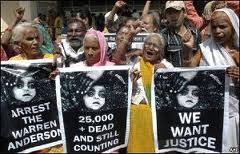
Bhopal gas tragedy a closed case now: US

August 20, 2010

Washington: The United States on Thursday said that the Bhopal gas tragedy is a closed case now. ”Yes”, State Department Spokesman PJ Crowley told reporters when asked if US considers Bhopal gas tragedy as a closed case now. Later, the State Department official clarified that legally Bhopal gas case is closed.

In December 1984, a Union Carbide plant in Bhopal spewed toxic gas into surrounding neighbourhoods, killing thousands instantly and tens of thousands later. In 1999, Dow Chemical Company bought Union Carbide.

This year, a court sentenced seven Indian managers to two-year jail terms. After public outrage that the sentences were not tougher, India promised to renew efforts to extradite Union Carbide’s former boss Warren Anderson. Meanwhile, BJP and Left parties yesterday alleged that the US was trying to arm-twist India to let Dow Chemicals go scot-free with regard to its liability in the Bhopal gas tragedy.

PTI

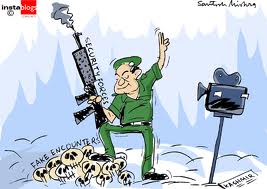
Fake Military Encounters in Jharkhand, India


By Gladson Dungdung

In the afternoon on July 5, 2010, the security forces comprising of JAP and SAF under the leadership of E.H. Siddique the officer-in-charge of Tamar Police Station arrived to Gunti village and picked up 45 year-old Etwa Munda of Papirdah village (which comes under Tamar police station of Ranchi district in Jharkhand), when he was in the house of his relative Manav Munda. The police also caught a girl Bengi Kumari and escorted both of them towards Jabla pahari (forest). After sometime, the villagers heard the sound of firing and rushed toward the spot. They were shocked to see the dead body of Etwa Munda laying on the ground.

The police framed the cold-blooded murder of Etwa Munda as a result of an encounter between the police and the Maoists. The police also depicted him as a hardcore Maoist who was very closed to the Maoist Zonal commander Kundan Pahan. Perhaps, Etwa Munda was not an innocent person but under which laws the police killed him in a fake encounter is the question needs to be answered.

Since the villagers were fully aware of the cold-blooded murder of Etwa Munda therefore the police spared Bengi Kumari and threatened the villagers and family members of the deceased for keeping quite. However, the villagers wanted to raise the issue therefore they approached to a local activist Xavier Soy and told him about the fake encounter.

Meanwhile, when the police came to know about Xavier Soy’s acts of attempting to unearth the fact of the fake encounter and encouraging the villagers for raising the issue, the police put Xavier Soy with his school going son behind the bars alleging them of keeping the Maoist literature in their house. The police also do not allow the outsiders especially the Human Rights Activists and the Journalists to roam in the area so that the truth remained buried. Finally, the police succeeded in shutting up the villagers’ mouths and in framing the cold-blooded murder as a genuine case of encounter between the police and the Maoists.

Amidst, Tamar police again picked up another villager Rajesh Singh Munda of Papridah village on August 1, 2010 before the dawn from his village when he was sleeping. The police took him near Koja River in Heso forest and gunned down after branding him as a hardcore Maoist and aide of the Maoist Zonal Commander Kundan Pahan.

The former Jharkhand chief Minister Arjun Munda raised the question and demanded for the CBI inquiry alleging that the Police killed Rajesh Singh Munda in a cold-blooded murder. He also said that the Naxalism would grow if innocent villagers were being coined as Naxalites and killed in fake encounters. He further said that the police kill innocent Adivasis precisely because they are voiceless. Perhaps, this is the first time in Jharkhand when a political leader has raised questions against the cold-blooded murder. Obviously, the most of the people keep quiet on the case of fake encounter because the licensed killings are not only accepted in our so-called civilized society but we also applaud for it, award the killers and make them heroes of our Indian society, which foundation lies on the non-violence ethos.

It would be very interesting to know whether Etwa Munda and Rajesh Singh Munda were members of the Maoist groups? The circumstances suggest that they were not the members of the Maoist groups. For instance, the Maoists had called off ‘India block’ on July 7th after alleged killing of their leader Azad. Similarly, on 8 August 2010, they shut down Jharkhand, Bihar, Chhatsgarh and West Bengal against the arrest of Maoist leader Rajesh alias Udayji from Ranchi the capital city of Jharkhand. However, they did not even issue a statement after brutal killings of Etwa Munda and Rajesh Singh Munda by the Security Forces, which is a clearly indication that they were not the members of the Maoist groups. However, the villagers do not deny Etwa Munda’s involvement in some illegal activities but denied him being the member of Maoist groups. Perhaps, Rajesh Singh Munda was completely innocent.

Indeed, the police often conduct fake encounters for ensuring medal, award and promotion for them but now the things have changed. The purposes of cold-blooded murders are entirely different in the red corridor. The Security forces have been organizing the fake encounters in the forests with the intention of frightening the villagers so that they can stop supporting the Maoists. It is to show the brave work of the security forces to the city dwellers especially the middle class for getting their support for the bigger assault against the Maoist. It is also to bring back the lost moral ground of the security forces. And of course, it is to shield their failures and to justify the so-called anti-Naxal operations of the Indian government.

For instance, on July 1, 2010 the Police had organized a mass meeting at Sarjormdih village near Bunda police station of Ranchi district in Jharkhand against the Maoists, where 3000 villagers of 24 villages had participated and challenged the Maoists. Instead of surrendering, the Maoists killed Sandu Munda on July 3, who was the first speaker in the meeting. The police had instigated the villagers for going against the Maoists without ensuring their security therefore the Jharkhand Police had faced heavy criticism. In this situation, there was no other way to counter the criticism therefore the police killed Etwa Munda and Rajesh Singh Munda in cold-blooded murders and depicted them as hardcore Maoists. The people just followed the media’s story and kept quiet.

Since, the so-called anti-Naxal operations have very clear link to the corporate interest therefore one should understand the media’s silence on the state sponsored human rights violations. Meanwhile, It is very strange to know about the silence of Human rights groups on humiliation, molestation, torture, rape and cold-blooded murder by the Security Forces during the ongoing anti-Naxal operations in the state, who ensure their bread and butter in the name of promotion and protection of the human rights. Perhaps, these human rights groups are afraid of the state agencies since anyone who raises the issues of human rights violation in the red corridor is coined as a Maoists supporter. But does it mean they should keep silence?

However, the Indian constitution does not deny the right to life to anyone residing in the country. Similarly, our corporate Home Minister P Chidambaram while responding to a question of alleged killing of Maoist leader Azad in the Parliament said, “Whether somebody is a good man or bad man, he should not be killed in a fake encounter.” He further said, “When I took the charge of my ministry, I made it clear that there would no fake encounter killings by central agency”. What does it mean? It clearly means the Indian State has been carrying on the fake encounters, which must be a serious concern for us. Therefore, the CBI inquiry should be established in all the cases of encounters taken place in the so-called red corridor since January 1, 2001 to 15 of August 2010. If it happens the people of the country would be shocked to hear that how the security forces have killed the innocent people in the fake encounters.

There are some very significant points in the so-called encounter cases. Interestingly, when the police kill any person either in a genuine or fake encounter, the person is coined as the top Maoists (area commander or zonal commander) and when the Maoists attack on police the most affected are small policemen. Why are the police not able to target the guerillas though they are always able to target the top guns of the Maoists? Similarly, whenever police catch a person, he is propagated as a hardcore Maoist. The strange thing is at the end of the day police fail to provide sufficient evidence in the court and the most of the so-called hardcore Maoists are acquitted due to lack of evidence. What does it mean? It clearly means the police victimize the innocent people and put them behind the bars. Can the Indian State tell its people that how many Maoists were convicted for last four decades?

The peculiar thing in every case of encounter is the Maoist fire more bullets on the security forces than the security forces fire on the Maoists. Ironically, non-of our security force gets injury and the Maoists are killed. Therefore, it is very difficult to understand the puzzle of encounter. Precisely, because though our security forces are so smart but at the same time they are not able to cleanse the Maoists. In the case of Rajesh Singh Munda, the police claim of the Maoist firing 300 rounds bullets on the Police and the Police fired merely 150 rounds in their response. However, Rajesh Munda was shot dead and not a single policeman got injury. Of course, one Indian would never like its soldier to be injured but we have to understand the logic of so-called ‘encounter’.

The so-called educated people who always raised the questions on intention of the Human Rights Groups and attempted to brand them as the Maoists over ground, Maoist sympathizers and supporters must understand that we are the concerned and tax payer citizens of India, who have also given our mandate to the Indian State for promoting, protecting and ensuring everyone’s constitutional rights. Therefore, even if the Maoists create problems in the country, the responsibility lies with the Indian State. We also have every right to question the Indian State whenever and wherever the human rights of the marginalized people are violated. Any one who is annoyed with the questions does not deserved to be in the power. If P. Chidmabaram does not want to hear our cries, he must step down from the Home Ministry immediately because the buck would always stop at his desk whenever and wherever the central forces violate the human rights of the people in India.

However, whether Etwa Munda and Rajesh Singh Munda were innocent or guilty, their constitutional rights – right to life was taken away by the mighty guns and the state is responsible for it therefore it must tell its people the truth. Can we accept killings of anyone either legally or illegally in the civilized society? Are we really civilized people? How can we take anyone’s life if we can not give life to anyone? In some cases of licensed killings we might be the egally right but we would be always ethically wrong. And of course, the killing is a sin for humanity. Therefore, we must ask the state to uphold the constitution of India and we should not accept the cold-blooded murder in any circumstance. The state is duty bound to promote, protect and ensure the human rights of everyone therefore it can not wither away from its responsibility. And of course, we should not let it go.

While addressing to 64th Independence Day, the Prime Minister of India Manmohan Singh said that his government is committed to protect its every citizen therefore one would question whether Etwa Munda and Rajesh Singh Munda were Indian citizens too? Is Indian government committed to protect only the corporate sharks, politicians and bigwigs? Or whether the Indian State is also committed to protect the common men? If so then it must stop handing over the livelihood resources of the common men to corporate sharks and stop the operation green hunt, which is hunting the innocent rather than cleansing the Maoists. Perhaps, the question may remain unanswered is will Etwa Munda and Rajesh Singh Munda get justice or our police men would be allowed to enjoy impunity as they have been doing? Certainly, one can hope for justice for the victims of cold-blooded murders after development of Sohorabudding fake encounter case in the right direction but only the time will tell.

Gladson Dungdung is a Human Rights Activist and Writer from Jharkhand. He can be reached at gladsonhractivist

Source: The South Asian

Despite Scandals, Indian Mining Bosses Thrive

BELLARY, India — Janardhana Reddy insists he is not a king. No, no, no, he protested, as a servant trotted across the courtyard to deliver a cup of cooled water. Men with machine guns stood outside. An architect waited to discuss the new mansion, while another man hovered nearby, sitting in the grass.

The Bellary district holds its state’s richest iron ore veins. More Photos »

“He’s the state minister of health,” Mr. Reddy said of the man in the grass, who stood up, made a little bow and hurried away.

Mr. Reddy may not be a king, but he does represent a new phenomenon in the political economy of India: He and his brothers are the country’s most powerful mining bosses at a time when illegal mining has become a national scandal, amid accusations that billions of dollars of publicly owned minerals have been stolen, often by people holding public office.

For decades, moneyed interests have bankrolled India’s political parties, but nouveaux mining magnates like the Reddy brothers have conflated money and politics in far more naked fashion, as the thirst for iron ore in India, and more so in China, has created huge fortunes.

Mining scandals have emerged in at least five Indian states, with more than 20,000 complaints of illegal mining filed nationally in the past three months. Politicians in several states are accused of enriching themselves or their friends, including a former chief minister of the state of Jharkhand, who is charged with extorting huge bribes in exchange for granting mining leases.

This week, the Indian media reported that the central government would form an inquiry to investigate illegal mining across the country, a move regarded as a first step in reversing past failings in regulation. Here in the southern state of Karnataka, the controversy surrounding the Reddy brothers has become a national political melodrama, threatening at different times to bring down the state government, while also throwing global markets for iron ore into turmoil.

The Reddys, who say they are innocent of claims of illegal mining, have transformed themselves in less than a decade from obscure activists for the Hindu nationalist Bharatiya Janata Party, or B.J.P., into political bosses who directly or indirectly control three state ministries and dominate local government in the Bellary district, which holds the state’s richest iron ore deposits.

“You’ve never had mining dons entering politics and controlling government,” said Ramachandra Guha, a historian who lives in the state capital of Bangalore. “They are more or less uncrowned kings in their district. There is a level of brazenness that even by the standards of Indian politics is new.”

What prompted the change, and the rush by political figures into mining, was the steady rise in iron ore prices during the past decade. India relaxed its export restrictions at roughly the same time that China was in the throes of the biggest construction boom in history, culminating with the 2008 Olympics in Beijing. Technical advances allowed more types of ore to be exported, and the price per metric ton soared. Where once it had brought about $17, today the price is about $130.

“It encouraged practically everybody who was somebody to come into this business,” said N. Santosh Hegde, a former justice on India’s Supreme Court who is leading an official corruption investigation into illegal mining in Karnataka. “People who had no knowledge of mining but who had money power or muscle power — either would work — they came into mining. It really became sort of a rat race.”

Mr. Hegde’s investigation has discovered that at least 10 members of the Indian Parliament or the Karnataka state assembly control leases in the Bellary region. By 2004, when the Reddys got their first lease, they had emerged as political players. The sons of a police constable, Janardhana Reddy and his two brothers had been key supporters of a B.J.P. candidate, Sushma Swaraj, in a local parliamentary race in 1999 that became a national showdown against Sonia Gandhi, the scion of the governing Indian National Congress Party.

Ms. Gandhi won the race, but the Reddys would steadily turn the Congress Party stronghold toward the B.J.P. Ms. Swaraj, now the leader of the opposition in Parliament, became their patron. To get rich, however, the Reddys transcended partisanship and allied themselves with the Congress Party’s Y.S.R. Reddy (who is no relation), the powerful chief minister in the neighboring state of Andhra Pradesh. Iron ore deposits straddle the border of the two states, and the Reddys obtained leases on the Andhra Pradesh side.

The Reddys got richer, bought a helicopter and are believed to have bankrolled numerous political campaigns. In 2008, they financed B.J.P. victories that helped the party to take over the Karnataka state government. As his reward, Janardhana Reddy became the state’s minister of tourism; his brother Karunakar became minister of revenue; his brother Somashekhar became president of the state’s powerful milk federation; and their close ally, B. Sriramulu, became the health minister.

Last year, when the state’s chief minister, B.S. Yeddyurappa, tried to levy a fee of about $21 per truckload of ore, the Reddys led an internal party revolt, rallying loyal legislators and threatening to withdraw support for the government. Faced with the potential collapse of his administration, Mr. Yeddyurappa relented on the levy, fired two close allies who had opposed the Reddys and wept during a news conference. Meanwhile, Janardhana Reddy’s portfolio also included the post of minister in charge over the Bellary district. “The entire government machinery is under his belt,” complained Raghavendra Rao, a spokesman for the Baldota Group, a mining conglomerate at odds with the Reddys.

Now, though, the Reddys’ power is being tested. Last year, their patron in Andhra Pradesh, Y.S.R. Reddy, died in a helicopter crash. Without his political protection, the Reddys were subjected to notices for illegal mining, building illegal roads and moving state boundary markers to expand the reach of their mine. In the interim, their mining in Andhra Pradesh has been suspended.

At the same time, Mr. Hegde, the corruption investigator, is looking into claims that the Reddys have been secretly controlling mining on the Karnataka side of the border by illegally operating leases held by other people — and taking the majority of the ore.

With bad publicity mounting, the B.J.P.’s national leadership has appeared divided over the Reddys. The Congress Party, sensing opportunity, held a 190-mile protest march from Bangalore to Bellary. The B.J.P. held a counter rally.

Under pressure, the Karnataka chief minister recently acknowledged that illegal mining was rampant and blocked exports from state ports, a move that contributed to a spike in prices of about 4 percent on global markets. Yet the chief minister has still protected the Reddys by blocking an investigation by India’s Central Bureau of Investigation and saying no wrongdoing had been proved against them.

Sipping his cup of water, Janardhana Reddy seemed unconcerned about the growing uproar. Asked about the investigations, and about whether he controlled the state and local governments, Mr. Reddy blamed partisan politics, saying the Congress Party was determined to smear him to win back Bellary.

“Go and ask any common man and they will tell you that I don’t act like a king,” he said. “God is great. And God has been giving me these beautiful mines.”

Hari Kumar contributed reporting. Saimah Khwaja contributed research from New Delhi.

Toilet-Paper Scandal in India ‘Shames’ Commonwealth Games Host


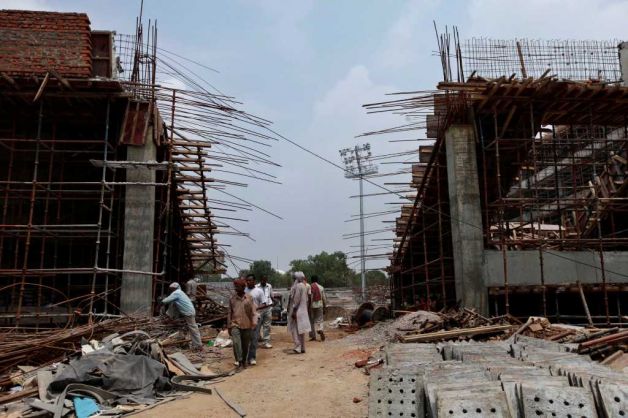
In this Aug. 17, 2010 photo, laborers work at Shivaji stadium, one of the practice venues for the upcoming Commonwealth Games, in New Delhi, India. The sporting event which India hoped would herald its emergence as a regional power and serve as a springboard to an Olympic bid has instead turned into a chaotic mess. Less than seven weeks before New Delhi is to host to the Commonwealth Games, venues are still under construction, top officials have been forced out in scandal, costs have soared and many are questioning the wisdom of spending so much money on an event in a nation riddled with social ills. Photo: Saurabh Das / AP

[The human needs of people in India are not high on the government's agenda, which is filled with such fast-buck boondoggles as the "Commonwealth Games" and other corrupt corporate ventures]

By Mehul Srivastava – Aug 19, 2010

Organizers of the Commonwealth Games called a press conference this week to talk about how prepared New Delhi was to host a sporting event for 71 countries. Instead, they fielded questions about how much they paid for toilet paper.

Allegations of corruption and mismanagement are overtaking a tournament that Prime Minister Manmohan Singh said would “signal to the world that India is rapidly marching ahead with confidence.” The Economic Times newspaper, citing internal documents, said organizers bought $80 rolls of toilet paper, $61 soap dispensers and $125 first-aid kits.

Government spending for the Commonwealth Games has overrun a 2003 estimate of $500 million by more than nine-fold. The Games have been criticized as the most expensive ever by the Comptroller and Auditor General agency and opposition parties in a nation where the World Bank says 828 million people live on less than $2 a day.

“The publicity that we have received, and how the world is looking at us, is in a negative fashion,” said Randhir Singh, vice chairman of the organizing committee of the Commonwealth Games 2010. “That brings me great shame.”

Singh declined to comment to Bloomberg News on the newspaper reports. Lalit Bhanot, secretary general of the organizing committee, said the reports were “inaccurate and mischievous.” He declined to elaborate.

No ‘Extravagance’

India spent at least $4.6 billion — compared with its December 2003 estimate of $500 million — upgrading stadiums, refurbishing roads and building power and water utilities. It spent another $2.7 billion on a new airport terminal to welcome athletes participating in the 12-day event starting Oct. 3.

“We have not indulged in any extravagance,” M.S. Gill, the minister for sports, told lawmakers last week.

India is spending less money than London and Beijing as hosts of the 2012 and 2008 Summer Olympics, respectively, he said. The last time India spent money upgrading and building new stadiums was for the 1982 Asiad Games, he said.

“The newly built stadia are not only spacious but are best with the state-of-the-art technology,” Gill said. “They are not only beautiful but economical in comparison with those built in London or China.”

Officials Resign

The controversies prompted the organizing committee’s treasurer and another member to resign. Prime Minister Singh ordered an investigation by the Central Bureau of Investigation and said Aug. 14 he would personally inspect some facilities.

At least 20 stadiums were refurbished or built from scratch for $640 million, said Manish Tiwari, spokesman for the Congress party-led ruling coalition. Three are ready to use, organizers said. The others are being fumigated for mosquitoes carrying dengue and malaria as structural work finishes.

A day after the weightlifting hall opened Aug. 1, its roof leaked during a monsoon, and workers in white helmets climbed across the structure to patch it.

India’s Central Vigilance Commission said in August that “almost all” the contractors for games-related projects inflated their costs. The quality of work was poor, and “test records were fabricated to show high strength,” according to the government commission set up to investigate corruption.

The commission said concrete samples from stadiums, athlete housing and parking facilities failed a key strength measure, and the structures used reinforced steel that wasn’t properly treated with anti-corrosive materials.

$61 vs. $1.97

“The Commission has advised the organizations concerned to take corrective steps,” it wrote in a report urging authorities to fix “responsibility against officers identified for lapses.”

Organizers spent $220 on mirrors costing $98 retail, $61 on soap dispensers costing $1.97, and $250,190 on high-altitude simulators costing $11,830, according to reports by the Economic Times and India Today magazine, citing tender documents.

Bhanot declined to comment to Bloomberg News.

From the start, the government was criticized for spending money on the games instead of on programs to alleviate poverty. UNICEF says 665 million Indians don’t have access to toilets, so they defecate in public.

The games will displace at least 400,000 of New Delhi’s 11.8 million residents, according to an estimate by the New Delhi-based Housing and Land Rights Network.

“Developing countries have very little reason to host these games,” said Shalini Mishra, a senior researcher at the non-profit organization. “The amount of money that has been spent on stadiums alone could have done so much more for the poor. The government seems to have lost its sense of priorities.”

Bamboo Screens

Slums that weren’t cleared in time will be screened off with bamboo to “conceal the sights,” said New Delhi Chief Secretary Rakesh Mehta, the city’s top bureaucrat. Beggars will be taken off the streets, traffic will be rerouted and much of the city center will become a high-security zone.

As traffic whizzed by her 2-year-old son, Malati Mahto chipped away at the pavement on New Delhi’s posh Lodhi Road, refurbishing the main thoroughfare for traffic to the main arena, Jawaharlal Nehru Stadium, and parking lots. She said she earns $1.22 working 12-14 hours a day with no helmet or gloves.

The New Delhi government said all laborers are supposed to earn at least $9 a day.

The 2.5-kilometer (1.5-mile) stretch is getting a $3.9- million makeover, according to the New Delhi Municipal Corp. The city is spending $3.5 billion to upgrade highways, expand the subway system and build the airport terminal, minister of urban development S. Jaipal Reddy said.

Mahto, 28, said she was told by the contractor who hired her that her family must leave their blue, plastic hut alongside Lodhi Road by Sept. 15.

“They told me that people will come from England and Australia to run and jump,” Mahto said.

South African strikes expose deeper issues


Aljazeera.net

By Patrick Bond

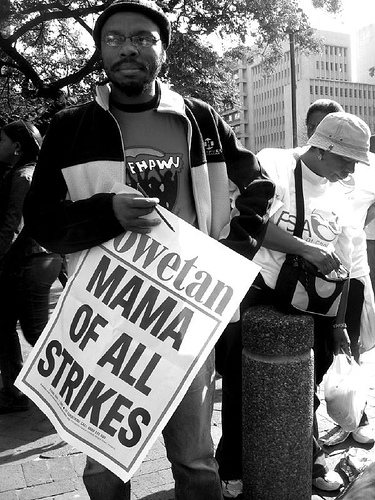
The two major civil service unions on strike against the South African government have vowed to intensify pressure in coming days, in a struggle pitting a million members of the middle and lower ranks of society against a confident government leadership fresh from hosting the World Cup.

Teachers from the SA Democratic Teachers Union (Sadtu) and nurses from the National Health and Allied Workers Union (Nehawu) have continued picketing at schools, clinics and hospitals, leading to widespread shutdowns since August 18.

Skeleton teams of doctors and military personnel have been compelled to send non-emergency cases home.

In several confrontations with police on Wednesday and Thursday, striking workers were shot with rubber bullets and water cannons.

Rising Anger

Notwithstanding reasonably high popularity enjoyed by Jacob Zuma, the affable president, recent reports about vast profits in ‘Black Economic Empowerment’ deals for his son, nephew and inner-circle allies are raising anger.

A press statement from Nehawu lambasted Pretoria’s hedonistic state-managerial class: “We read on a daily basis government’s wasteful expenditure on World Cup tickets, cars, hotels, parties and advertising.”

Indeed, Pretoria subsidised the World Cup to the tune of $5bn, by most estimates, including more than $3bn on stadiums that are now widely recognised as ‘white elephants’.

Many are unable to fill the stands and too expensive for the weakly-supported local football teams. (Even the cricket and rugby teams which attract more fans are hesitant to move from their current world-class venues).

Corporations sponsoring the soccer tournament took home more than $4bn in profits, tax free without exchange controls.

Opulence and inequality

During June to July, South Africa displayed to foreign visitors and television audiences an opulence that belied its increasingly stressed economy and extreme inequality.

The recovery from a two per cent GDP decline in 2009 is faltering, with three per cent announced growth this year widely derided, as the first half of 2010 witnessed continuing job losses.

More than one million of the 13 million workers in South Africa’s formal economy have lost their jobs since 2008.

In spite of the pressure, workers have become surprisingly militant, winning above-inflation wage settlements from the transport and electricity parastatals in recent weeks, assisted by pressure they wielded before and during the World Cup.

With inflation at 4.5 per cent, the government’s latest offer of a seven per cent annual increase plus a $25 rise in the monthly housing allowance (to $90) would ordinarily be a strong settlement.

However, union demands are much higher, including an 11 per cent wage increase (backdated three months) and a $130 increase for the housing allowance, as well equality in the state medical aid subsidy.

In addition to higher taxes on business and the rich (they had fallen markedly from 1994 levels), unions point out other places that state waste and corporate subsidies could be cut.

Frivolous spending

Vast spending on infrastructure has come under strong criticism, especially given that the four major components – two new coal-fired power plants ($35bn), financed partly by the World Bank, a ($3bn) fast-train from the Johannesburg airport to the main financial district, a ($1bn) airport in Durban, and new (multi-billion dollar) dams for big mining and agricultural interests – mainly benefit elites and come at the cost of infrastructure for poor people.

But while the case for a redirection of state funds is strong, the question arises as to whether a potential ‘labour aristocracy’ will enjoy affluence at a time of ongoing job cuts and misery for the unskilled, unemployed masses.

The union reply is typically that each worker in turn supports large extended families, insofar as apartheid-era migrancy relations still tie South Africans to kinship networks stretching hundreds of kilometres.

Union leaders point out that no other social force in South Africa campaigns so actively for broader socio-economic rights that benefit the unemployed, such as a proposed National Health Insurance and Basic Income Grant ($15/person/month) that would reach the most marginalised communities.

But the unions are mainly losing these social-wage battles.

Increasing disillusion

The unions’ greatest disappointments with Zuma’s government are its amplification of neo-liberal economic policies such as exchange control liberalisation and monetarism (high interest rates), and its failure to ban labour brokers which supply hundreds of thousands of cheap, casualised ‘outsourced’ workers at far lower wages.

Also reflecting the widening social divides are the several thousand protests that police record each year.

Many have flared up spontaneously as localised ‘service delivery’ riots, with results that include vandalism of municipal offices and even xenophobic outbreaks.

Unfortunately, no major urban social movement has emerged to capture and channel the frustrations into a sustained, democratic force.

While a settlement favourable to labour is expected within coming days, given how tough the unions are fighting, the pressures on the economy and society will keep growing.

Patrick Bond (bondp@ukzn.ac.za) is director of the University of KwaZulu-Natal Centre for Civil Society in Durban: http://www.ukzn.ac.za/ccs

Nigerian women block gas pipeline

2010-08-20

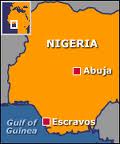
Lagos – A group of Nigerian women in the country’s oil-rich south said on Friday they had blocked access to a Chevron natural gas pipeline to protest poor living conditions in their community.

Women from the Ugborodo community in Delta State want Chevron to provide access to electricity and address damage to the environment, community leader Thomas Ereyitomi said.

“They are not allowing access to the plant and to allow any form of operation to go on,” he said of the protesters.

“It is immoral for Chevron not to provide basic amenities in a community in which they operate and generate money.”

Chevron officials declined to comment, saying they would issue a statement later.

Ereyitomi did not provide the number of people taking part in the protest, but claimed that it involved all women from the community.

A similar protest last month was abandoned following a promise from the Delta State government to look into the community’s grievances.

“That meeting with the government failed and so the protest resumed on Monday,” Ereyitomi said.

Demanding jobs

He said government officials have invited representatives of the protesters to a meeting on Tuesday in Abuja, the nation’s capital.

“The outcome of that meeting will determine whether the protest will be indefinite or not,” he said.

In 2009, Chevron’s total daily production in Nigeria averaged 480 000 barrels of crude, 111 million cubic feet of natural gas and 3 000 barrels of liquefied petroleum gas.

Oil and gas operations in Nigeria are often disrupted by communities demanding jobs and a fairer distribution of industry revenue, as well as protests against environmental degradation.

Militants in the oil-rich Niger Delta have carried out dozens of attacks on petroleum installations, but an amnesty deal last year has led to a sharp decline in the unrest.

Nigeria is the world’s eighth largest oil exporter and a member of OPEC.

- AFP

————————————————————————————

Itsekiri Women Invade $.8bn Chevron Facility in Delta

From Omon-Julius Onabu in Warri, 08.19.2010

Delta

Hundreds of protesters, made up of mostly women from the Itsekiri community of Ugborodo in Warri South-West Local Government Area of Delta State, yesterday invaded the Federal Government-owned $800 million gas facility located in the Escravos channel at Madangho.
The protesters told newsmen in Warri yesterday that they were forced to re-occupy the Chevron Tank Farm in the area in protest against the shabby treatment by Federal Government and the American oil giant, Chevron, which operates the facility.

The aggrieved people, who stressed that they were protesting ”criminal neglect of our community by Government and Chevron even in the face of palpable threat to our very existence as a people”, said that they had suspended occupation of the facility three weeks ago following assurances that they would be given audience appropriately.
They revealed that Delta State Governor, Dr Emmanuel Uduaghan, had met with their leaders and appealed to them to sheathe their swords, with a promise that the Federal Government and Chevron would soon dialogue with them on the critical issues.

However, after several weeks, there was no sign that the promised peace meeting of stakeholders would be summoned or convened, they said.
The protesters, who stressed that their action was neither politically motivated nor prompted by Governor Uduaghan because he is Itsekiri, said that they were outraged by the fact that the Ugborodo community was completely left out of the shore protection project recently advertised by the Ministry of Niger-Delta Affairs.
According to the Chairman, Ugborodo Community Trust Fund, Deacon Thomas Ereyetomi, the resumption of the protest was simply to send a signal to the government that the proposed meeting needs be held ”to address the issues of the total degradation and underdevelopment of the Ugborodo community.”

Ereytomi stated: ”We will no longer tolerate the act of criminal neglect and abandonment; because available records and statistics have shown that for more that 45 years since the emergence of the Okan Oilfield in 1963, Ugborodo has consistently produced above 250,000 barrels of crude oil per day to the nation’s economic growth. They noted that they would not be intimidated by the heavy security presence particularly around Chevron facilities in the area. ”We will continue to disrupt their activities and die with the Federal Government until they answer us”, they warned. ”Beside lack of electricity and other infrastructures, our community is being threatened by the harsh oceanic waves of the Atlantic Ocean and the daily crude oil and gas operational economic activities of the oil companies”, Mrs. Mary Olowu, a community woman leader cried. They said the protest would not abate until the government provided
electricity and award the contract for the shore protection of the community, adding that the community accounted for 32% of the oil and gas production in Delta State.

”We cannot continue to suffer oppression, suppression and marginalization. How can our community host the Chevron Tank Farm as well as Loading facility and provide the gas to power the nation’s economy, yet no concrete attempt is being made to step down power supply to the community?

”In less than three years from now the surging Atlantic Ocean would have wiped away our communities from the face of the earth and in spite of our crying out loudly everyday in the media to call the attention of the Federal Government to our plight, the Niger Delta Ministry did not deem it fit to include the Ugborodo shore protection project in the recently advertised job showing clearly that we are not part of the Nigerian project,” they added.

They therefore demanded the immediate engagement or a reputable and internationally competent dredging company to handle the shoreline protection and reclamation of Ode-Ugborodo community as well as the extension of electricity to Constain in Warri, saying that was a precondition for peace to reign in the area.
Meanwhile, the security Joint Task Force (JTF) has beefed up security around the facilities of CNL in the area in order to forestall any eventuality, including possible attack on major production and loading platforms situated within the Itsekiri communities.

THISDAY learnt that the JTF Sector 1 Commander, Col Jamil Sarham, took the measure following an emergency meeting with the JTF general Commander in the agency’s headquarters in Yenagoa, Bayelsa State.
This is spite of the observation that the protest had remained generally peaceful; despite warning by the women that the action could be extended to Chevron facilities outside the Ogborodo vicinity

Followers