25th ID - Brasil India campaign in the antiCup demos

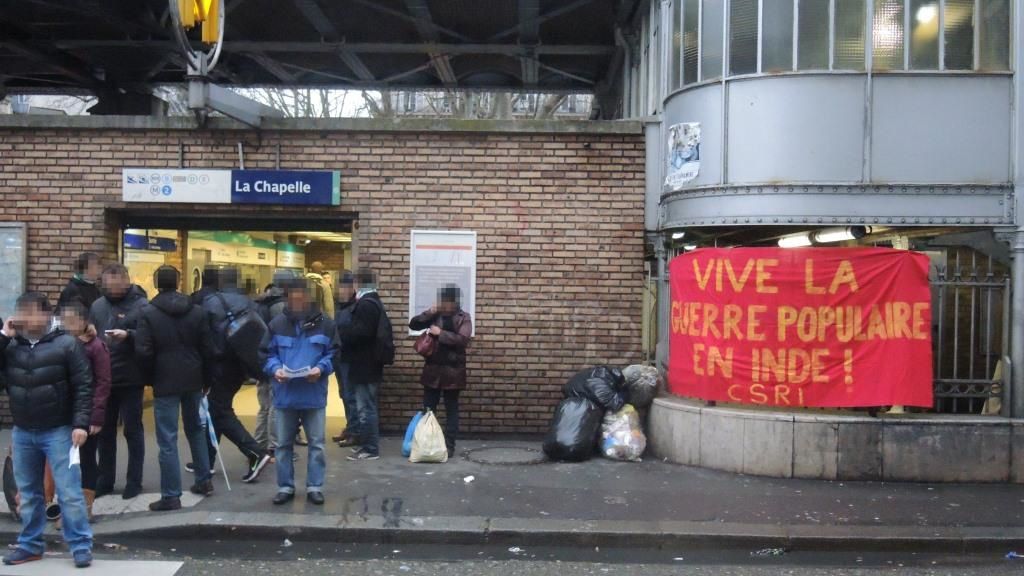
25th ID - Pour la libération inconditionnelle de l’ensemble des prisonnières et prisonniers politiques en Inde !
POUR LA LIBÉRATION INCONDITIONNELLE DE L’ENSEMBLE DES PRISONNIÈRES ET PRISONNIERS POLITIQUES EN INDE !
 Faisons du 25 janvier 2014
une grande journée internationale
de solidarité et de combat !
En Inde, plus de 10 000 personnes soupçonnées d’être maoïstes croupissent en prison ; à celles-là s’ajoutent des milliers d’autres impliquées dans les mouvements de libération nationale (au Cachemire ou dans l’État du Manipur, notamment) ou d’autres mouvements démocratiques.
Aux côtés des dirigeantes, dirigeants, cadres et combattantes et combattants de l’Armée populaire de libération et de guérilla, plus de 90 % de ces prisonnières et prisonniers sont des villageoises et villageois aborigènes (les Adivasis) ayant osé résister aux déplacements forcés ; des paysannes et paysans ayant lutté contre les accords signés par les gouvernements et les multinationales pour exploiter le peuple et continuer le pillage impérialiste des ressources naturelles ; des militantes et militants des minorités nationales qui se sont organisées pour contrer la menace croissante du fascisme communautaire hindou ; des étudiantes et étudiants, intellectuelles, artistes appartenant au Front révolutionnaire démocratique et d’autres organisations démocratiques, coupables de se tenir du côté des masses populaires contre la guerre menée par l’État indien ; des femmes et militantes féministes qui se sont unies pour lutter contre l’escalade de viols commis en partie par des membres des forces armées, de la police et des escadrons paramilitaires fascistes financés par l’État, pour qui le viol est une arme de guerre légitime.
Là où ils et elles sont détenues, les prisonniers et prisonnières sont confrontées au harcèlement de toute sorte, à la torture, au refus d’une mise en liberté provisoire, à des conditions de vie inhumaines, aux mutations arbitraires, aux agressions et à l’isolement carcéral ; les prisonnières, en particulier, sont très souvent victimes de viol.
En dépit des conditions de détention féroces qu’ils et elles subissent, les prisonnières et prisonniers résistent et luttent pour transformer les sombres prisons dans lesquelles ils et elles sont confinées en un front de lutte contre le fascisme montant en Inde et le régime au pouvoir.
La lutte pour leur libération inconditionnelle est une tâche urgente pour l’ensemble des forces solidaires et amies du peuple indien ; elle est partie intégrante de la lutte pour soutenir sa guerre de libération, jusqu’à la victoire.
Les classes dominantes de l’Inde font de plus en plus de ce pays une « prison des mouvements populaires ».
Depuis le milieu de l’année 2009, les classes dominantes indiennes, sous la direction et avec l'aide des puissances impérialistes, ont lancé une offensive sur plusieurs fronts et à l'échelle nationale, appelée « Opération Green Hunt ». Cette campagne n’est rien d’autre qu’une guerre contre les masses populaires ; elle vise à anéantir le mouvement maoïste et à réprimer les luttes populaires légitimes.
Si la répression des masses opprimées est le fait de tout État qui assume son rôle de rouage de l'exploitation et qu’elle a toujours été une caractéristique de l'État indien, l'opération Green Hunt surpasse d’emblée les offensives précédentes, à la fois par son ampleur et sa brutalité.
Des milliers de militantes et militants des organisations démocratiques et révolutionnaires de masse ont été assassinées, torturées et jetées en prison. Condamnées à la suite de fausses accusations, plusieurs d'entre eux et d’entre elles font face à de sévères peines.
Les massacres et viols collectifs, les pillages et la destruction de villages entiers par les forces armées sont désormais à l'ordre du jour.
L'opération Green Hunt vise officiellement à éliminer le mouvement maoïste, mais dans les faits, elle cible et cherche à supprimer toute revendication populaire. On associe les militantes et militants populaires au PCI (maoïste) pour pouvoir ensuite les accuser en vertu des lois draconiennes adoptées par les gouvernements central et locaux, au nom de la lutte contre le « terrorisme » et de la « sécurité nationale ».
Stoppons l’opération Green Hunt, arrêtons la guerre contre le peuple de l’Inde !
La répression la plus sauvage ne peut arrêter la guerre de libération des masses en Inde ; au contraire, elle suscite une plus grande solidarité morale et politique.
De nombreuses initiatives ont été entreprises à l’échelle internationale pour bâtir la solidarité avec la lutte de libération des masses populaires de l’Inde, dont la grande conférence internationale de Hambourg et les journées internationales d'action organisées par le comité international qui soutient la guerre populaire en Inde. Ces initiatives ont eu un impact certain un peu partout dans le monde et en Inde ; elles ont porté des coups à l'impérialisme et au régime indien. Ce dernier exhorte d’ailleurs maintenant les gouvernements des autres pays, particulièrement ceux de l'Union européenne, à interdire ces initiatives solidaires.
Pour cette raison, il est aujourd'hui plus que jamais nécessaire de consolider et d'étendre la solidarité.
C'est pourquoi nous appelons à une grande journée internationale de solidarité et de lutte pour la libération inconditionnelle des prisonnières et prisonniers politiques en Inde le 25 janvier 2014, qui devrait avoir lieu partout où ce sera possible, de toutes les façons possibles selon les décisions que prendront les comités et les forces solidaires dans chaque pays, incluant des actions de rue, des appels à la participation des masses, des activités de contre-information, des manifestations devant les ambassades et consulats indiens, les bureaux des organes de presse et des organisations humanitaires, etc. Ces actions pourront en outre avoir lieu toute la semaine précédant la journée internationale d’action.
Le Comité International de Soutien à la Guerre Populaire en Inde
5 décembre 2013
Info :
csgpindia@gmail.com
Nouveau blog (en anglais) : icspwindia.wordpress.com
Pour la France : csrinde.wordpress.com
PCmF/OCFR


Faisons du 25 janvier 2014
une grande journée internationale
de solidarité et de combat !
une grande journée internationale
de solidarité et de combat !
En Inde, plus de 10 000 personnes soupçonnées d’être maoïstes croupissent en prison ; à celles-là s’ajoutent des milliers d’autres impliquées dans les mouvements de libération nationale (au Cachemire ou dans l’État du Manipur, notamment) ou d’autres mouvements démocratiques.
Aux côtés des dirigeantes, dirigeants, cadres et combattantes et combattants de l’Armée populaire de libération et de guérilla, plus de 90 % de ces prisonnières et prisonniers sont des villageoises et villageois aborigènes (les Adivasis) ayant osé résister aux déplacements forcés ; des paysannes et paysans ayant lutté contre les accords signés par les gouvernements et les multinationales pour exploiter le peuple et continuer le pillage impérialiste des ressources naturelles ; des militantes et militants des minorités nationales qui se sont organisées pour contrer la menace croissante du fascisme communautaire hindou ; des étudiantes et étudiants, intellectuelles, artistes appartenant au Front révolutionnaire démocratique et d’autres organisations démocratiques, coupables de se tenir du côté des masses populaires contre la guerre menée par l’État indien ; des femmes et militantes féministes qui se sont unies pour lutter contre l’escalade de viols commis en partie par des membres des forces armées, de la police et des escadrons paramilitaires fascistes financés par l’État, pour qui le viol est une arme de guerre légitime.
Là où ils et elles sont détenues, les prisonniers et prisonnières sont confrontées au harcèlement de toute sorte, à la torture, au refus d’une mise en liberté provisoire, à des conditions de vie inhumaines, aux mutations arbitraires, aux agressions et à l’isolement carcéral ; les prisonnières, en particulier, sont très souvent victimes de viol.
En dépit des conditions de détention féroces qu’ils et elles subissent, les prisonnières et prisonniers résistent et luttent pour transformer les sombres prisons dans lesquelles ils et elles sont confinées en un front de lutte contre le fascisme montant en Inde et le régime au pouvoir.
La lutte pour leur libération inconditionnelle est une tâche urgente pour l’ensemble des forces solidaires et amies du peuple indien ; elle est partie intégrante de la lutte pour soutenir sa guerre de libération, jusqu’à la victoire.
Les classes dominantes de l’Inde font de plus en plus de ce pays une « prison des mouvements populaires ».
Depuis le milieu de l’année 2009, les classes dominantes indiennes, sous la direction et avec l'aide des puissances impérialistes, ont lancé une offensive sur plusieurs fronts et à l'échelle nationale, appelée « Opération Green Hunt ». Cette campagne n’est rien d’autre qu’une guerre contre les masses populaires ; elle vise à anéantir le mouvement maoïste et à réprimer les luttes populaires légitimes.
Si la répression des masses opprimées est le fait de tout État qui assume son rôle de rouage de l'exploitation et qu’elle a toujours été une caractéristique de l'État indien, l'opération Green Hunt surpasse d’emblée les offensives précédentes, à la fois par son ampleur et sa brutalité.
Des milliers de militantes et militants des organisations démocratiques et révolutionnaires de masse ont été assassinées, torturées et jetées en prison. Condamnées à la suite de fausses accusations, plusieurs d'entre eux et d’entre elles font face à de sévères peines.
Les massacres et viols collectifs, les pillages et la destruction de villages entiers par les forces armées sont désormais à l'ordre du jour.
L'opération Green Hunt vise officiellement à éliminer le mouvement maoïste, mais dans les faits, elle cible et cherche à supprimer toute revendication populaire. On associe les militantes et militants populaires au PCI (maoïste) pour pouvoir ensuite les accuser en vertu des lois draconiennes adoptées par les gouvernements central et locaux, au nom de la lutte contre le « terrorisme » et de la « sécurité nationale ».
Stoppons l’opération Green Hunt, arrêtons la guerre contre le peuple de l’Inde !
La répression la plus sauvage ne peut arrêter la guerre de libération des masses en Inde ; au contraire, elle suscite une plus grande solidarité morale et politique.
De nombreuses initiatives ont été entreprises à l’échelle internationale pour bâtir la solidarité avec la lutte de libération des masses populaires de l’Inde, dont la grande conférence internationale de Hambourg et les journées internationales d'action organisées par le comité international qui soutient la guerre populaire en Inde. Ces initiatives ont eu un impact certain un peu partout dans le monde et en Inde ; elles ont porté des coups à l'impérialisme et au régime indien. Ce dernier exhorte d’ailleurs maintenant les gouvernements des autres pays, particulièrement ceux de l'Union européenne, à interdire ces initiatives solidaires.
Pour cette raison, il est aujourd'hui plus que jamais nécessaire de consolider et d'étendre la solidarité.
C'est pourquoi nous appelons à une grande journée internationale de solidarité et de lutte pour la libération inconditionnelle des prisonnières et prisonniers politiques en Inde le 25 janvier 2014, qui devrait avoir lieu partout où ce sera possible, de toutes les façons possibles selon les décisions que prendront les comités et les forces solidaires dans chaque pays, incluant des actions de rue, des appels à la participation des masses, des activités de contre-information, des manifestations devant les ambassades et consulats indiens, les bureaux des organes de presse et des organisations humanitaires, etc. Ces actions pourront en outre avoir lieu toute la semaine précédant la journée internationale d’action.
Le Comité International de Soutien à la Guerre Populaire en Inde
5 décembre 2013
Info :
csgpindia@gmail.com
csgpindia@gmail.com
Nouveau blog (en anglais) : icspwindia.wordpress.com
Pour la France : csrinde.wordpress.com
PCmF/OCFR
25th ID - To the International Committee to Support the People´s War in India
Dear comrades,
Gran Marcha Hacia el Comunismo (Long March Towards Communism) has supported your call for 25 January 2014 Great International Day of Solidarity and Struggle with the Political Prisoners in India through making its blog a loudspeaker to create public opinion on the political prisoners of India and denounce their “living” conditions and sufferings in the sinister jails of the so-called “biggest democracy of the world”.
Between 20 and 25 January 2014, and on a daily basis, the Spanish Marxist-Leninist-Maoist blog of Gran Marcha Hacia el Comunismo selected, translated for the first time into Spanish and posted 6 different items related to the situation of the men and women political prisoners in India, the testimony of the hard conditions they experience, the tortures they suffer, their struggle through seat-in protests and hunger strikes, etc. All of these articles were headed with a link to the statement by the International Committee in Support of the People´s War in India calling for the 25 January 2014 Great International Day of Support and Solidarity with the Political Prisoners in India.
The texts in Spanish posted were:
MFPR Italia - India - ¡Por la libertad incondicional de todos los presos políticos! ¡Estamos del lado de las camaradas, mujeres, que son un corazón revolucionario decisivo de la Guerra Popular!
El mundo brutal de los presos políticos en la India
India - Movilización de presos de la Prisión Central de Lok Nayak Kai Prakash Narayan en Hazaribag
La tortura método rutinario de interrogatorio en la India: Wikileaks
India: Poner fin a las agresiones contra las mujeres presas en la Prisión de Byculla, Bombay
India - Libertad para los presos políticos
Furthermore, all of these 6 texts were sent daily by email to approximately 150 contacts, including political parties and organizations, class oriented trade unions, revolutionary media and progressive people not only from Spain but also from different countries of Europe, Latin America, Asia and North Africa.
Besides your blog, several other Communist and revolutionary blogs and websites from different countries (i.e. Revolución Naxalita, Maoist Road, Odio de Clase, Dazibao Rojo, Luminoso Futuro, Kaypakkaya Partizan) have reproduced at the same time these texts, helping in spreading the support to the political prisoners in India and making the working class and people of the world becoming more conscious on the situation faced by the political prisoners in India and for their unconditioned release.
Warmest internationalist greetings
Gran Marcha Hacia el Comunismo (Spain)
 GRAN MARCHA HACIA EL COMUNISMO
  Blog marxista-leninista-maoísta
Dear comrades,
Gran Marcha Hacia el Comunismo (Long March Towards Communism) has supported your call for 25 January 2014 Great International Day of Solidarity and Struggle with the Political Prisoners in India through making its blog a loudspeaker to create public opinion on the political prisoners of India and denounce their “living” conditions and sufferings in the sinister jails of the so-called “biggest democracy of the world”.
Between 20 and 25 January 2014, and on a daily basis, the Spanish Marxist-Leninist-Maoist blog of Gran Marcha Hacia el Comunismo selected, translated for the first time into Spanish and posted 6 different items related to the situation of the men and women political prisoners in India, the testimony of the hard conditions they experience, the tortures they suffer, their struggle through seat-in protests and hunger strikes, etc. All of these articles were headed with a link to the statement by the International Committee in Support of the People´s War in India calling for the 25 January 2014 Great International Day of Support and Solidarity with the Political Prisoners in India.
The texts in Spanish posted were:
MFPR Italia - India - ¡Por la libertad incondicional de todos los presos políticos! ¡Estamos del lado de las camaradas, mujeres, que son un corazón revolucionario decisivo de la Guerra Popular!
El mundo brutal de los presos políticos en la India
India - Movilización de presos de la Prisión Central de Lok Nayak Kai Prakash Narayan en Hazaribag
La tortura método rutinario de interrogatorio en la India: Wikileaks
India: Poner fin a las agresiones contra las mujeres presas en la Prisión de Byculla, Bombay
India - Libertad para los presos políticos
Furthermore, all of these 6 texts were sent daily by email to approximately 150 contacts, including political parties and organizations, class oriented trade unions, revolutionary media and progressive people not only from Spain but also from different countries of Europe, Latin America, Asia and North Africa.
Besides your blog, several other Communist and revolutionary blogs and websites from different countries (i.e. Revolución Naxalita, Maoist Road, Odio de Clase, Dazibao Rojo, Luminoso Futuro, Kaypakkaya Partizan) have reproduced at the same time these texts, helping in spreading the support to the political prisoners in India and making the working class and people of the world becoming more conscious on the situation faced by the political prisoners in India and for their unconditioned release.
Warmest internationalist greetings
Gran Marcha Hacia el Comunismo (Spain)
Blog marxista-leninista-maoísta
25th ID - Support Political Prisoners and People’s Activists in India PCR Canada
REVOLUTIONARY COMMUNIST PARTY SUPPORT POLITICAL PRISONERS AND PEOPLE’S ACTIVISTS IN INDIA
January 25th, 2014
The International Committee to Support the People’s War in India has called January 25th to be the International Day of Solidarity and Struggle for the release of political prisoners in India. This call is welcome as it recognizes the need of the hour.
Today, thousands of innocent activists, including indigenous peoples, have been imprisoned and harassed for simply demanding their rights to the land that they work upon and, to stop the destruction of their homes and livelihoods. Due to their valiant attempts to stop the environmental destruction caused by mining companies, the dispossession of their homes and ancestral lands for the building of industrial parks, or the harassment and rape of women, these activists have been branded as ‘Maoists’ and unfairly imprisoned.
Furthermore, the Indian government has started a McCarthyist witch-hunt against all activists and intellectuals, for example the case of Professor G.N. Saibaba, who have sought to elaborate and explain an alternative revolutionary vision of India’s future. The Indian government, in effect, is harassing and trying to intimidate activists and intellectuals not for what they have may or may not have done, but for what they simply think and believe. They are not arresting people for belonging to an illegal party or movement, but for simply sharing their vision and ideas. Indeed, the Indian government has effectively deemed anyone who opposes the neo-liberal imagination of India’s future as a grave threat to Indian internal security.
It is thus incumbent on all of us, progressive and revolutionary-minded people alike, around the world, to support these villagers, activists and intellectuals because if such arbitrary arrest and harassment is made acceptable in the ‘world’s largest democracy’ then we have effectively hollowed out the very basic freedoms that are supposed to characterize a free and democratic society.
REVOLUTIONARY COMMUNIST PARTY
January 25th, 2014
The International Committee to Support the People’s War in India has called January 25th to be the International Day of Solidarity and Struggle for the release of political prisoners in India. This call is welcome as it recognizes the need of the hour.
Today, thousands of innocent activists, including indigenous peoples, have been imprisoned and harassed for simply demanding their rights to the land that they work upon and, to stop the destruction of their homes and livelihoods. Due to their valiant attempts to stop the environmental destruction caused by mining companies, the dispossession of their homes and ancestral lands for the building of industrial parks, or the harassment and rape of women, these activists have been branded as ‘Maoists’ and unfairly imprisoned.
Furthermore, the Indian government has started a McCarthyist witch-hunt against all activists and intellectuals, for example the case of Professor G.N. Saibaba, who have sought to elaborate and explain an alternative revolutionary vision of India’s future. The Indian government, in effect, is harassing and trying to intimidate activists and intellectuals not for what they have may or may not have done, but for what they simply think and believe. They are not arresting people for belonging to an illegal party or movement, but for simply sharing their vision and ideas. Indeed, the Indian government has effectively deemed anyone who opposes the neo-liberal imagination of India’s future as a grave threat to Indian internal security.
It is thus incumbent on all of us, progressive and revolutionary-minded people alike, around the world, to support these villagers, activists and intellectuals because if such arbitrary arrest and harassment is made acceptable in the ‘world’s largest democracy’ then we have effectively hollowed out the very basic freedoms that are supposed to characterize a free and democratic society.
REVOLUTIONARY COMMUNIST PARTY
Today, thousands of innocent activists, including indigenous peoples, have been imprisoned and harassed for simply demanding their rights to the land that they work upon and, to stop the destruction of their homes and livelihoods. Due to their valiant attempts to stop the environmental destruction caused by mining companies, the dispossession of their homes and ancestral lands for the building of industrial parks, or the harassment and rape of women, these activists have been branded as ‘Maoists’ and unfairly imprisoned.
Furthermore, the Indian government has started a McCarthyist witch-hunt against all activists and intellectuals, for example the case of Professor G.N. Saibaba, who have sought to elaborate and explain an alternative revolutionary vision of India’s future. The Indian government, in effect, is harassing and trying to intimidate activists and intellectuals not for what they have may or may not have done, but for what they simply think and believe. They are not arresting people for belonging to an illegal party or movement, but for simply sharing their vision and ideas. Indeed, the Indian government has effectively deemed anyone who opposes the neo-liberal imagination of India’s future as a grave threat to Indian internal security.
It is thus incumbent on all of us, progressive and revolutionary-minded people alike, around the world, to support these villagers, activists and intellectuals because if such arbitrary arrest and harassment is made acceptable in the ‘world’s largest democracy’ then we have effectively hollowed out the very basic freedoms that are supposed to characterize a free and democratic society.
REVOLUTIONARY COMMUNIST PARTY
Statement of the NCP (OC) on the International Day of Solidarity and Struggle with Political Prisoners in India (This party was formed in the US last year)
We affirm the full support of our organization for the International Day of support to political prisoners in India called by the International Committee to Support the People’s War in India (ICSPWI). Our organization considers the ongoing war in India to be the key front in the global struggle between imperialism and revolution and the party leading it as the current vanguard in the struggle to practically implement Maoism as the third stage of Marxism and universal ideology of the proletariat.
Here in the US, there are also many political prisoners; communists, revolutionaries and national liberation fighters confined under conditions of isolation torture by the imperialist state, many for decades. The heritage of uncompromising struggle against imperialism they embody is the heritage we proudly uphold against the overwhelming reformism, right opportunism, economism and cultural identity politics which suffocates the popular movement in our country today.
It is our position that the best support we as communists in the imperialist centers can offer to the thousands of comrades facing torture and deprivation in the prisons of the reactionary Indian state and the most meaningful homage we can provide to the thousands who have been killed in combat and in cold blood by the class enemy is to work carefully and consistently to build the subjective basis of socialist revolution in our own countries.
At the current stage of accumulation of forces, this concretely means the ideological and organizational consolidation of advanced elements of the masses around proletarian politics to order to lay the foundations for the establishment of a communist party guided by Maoism. It is not only the communists in oppressed countries who should bear the burdens of war against this system while well wishers offer moral support in the base areas of imperialist capital. US imperialism is already considering more direct aid and support to Operation Green Hunt and the investment, trade and inter-military relations between the two states are significant.
Only a militant class struggle which destroys domestic social peace lead by a communist party towards the goal of the overthrow of the US imperialist state can decisively disrupt the flow of support to the Indian reactionaries. It is with this goal in mind that our organization was founded and we will continue to work towards it inspired by the heroic sacrifices and strategic contributions of our comrades in India.
Central Committee, New Communist Party (Organizing Committee)
January 25, 2014
25th ID - January 25th solidarity action in Manipur
Rickshaw drivers and traders display black flags and badges in support of the International day of Solidarity and Struggle with Political Prisoners in India


“To Repeal Armed Forces Special Powers Act 1958
To Stop Operation Green Hunt
To Stop War on People”
Rickshaw drivers and traders display black flags and badges in support of the International day of Solidarity and Struggle with Political Prisoners in India
“To Repeal Armed Forces Special Powers Act 1958
To Stop Operation Green Hunt
To Stop War on People”
“To Repeal Armed Forces Special Powers Act 1958
To Stop Operation Green Hunt
To Stop War on People”
s prestam apoio aos presos políticos da Índia

Por Rafael Gomes Penelas
Foto: Guilherme Moreira / A Nova Democracia
A equipe do Jornal A Nova Democracia foi convidada para acompanhar, na tarde da última sexta-feira (24/1), na Central do Brasil, Rio de Janeiro, o ato-panfletagem da Frente Revolucionária de Defesa dos Direitos do Povo (FRDDP) em apoio aos presos políticos da Índia.
A atividade foi realizada devido ao Grande Dia Internacional de Solidariedade e Luta convocado para ser realizado em diversos países neste sábado, dia 25 de janeiro.
Milhares de panfletos foram distribuídos e uma faixa foi exposta com os dizeres:‘LIBERDADE INCONDICIONAL PARA TODOS OS PRESOS POLÍTICOS NA ÍNDIA’.
Também participaram da atividade, militantes da Frente Independente Popular – RJ, do Movimento Feminino Popular (MFP), do Movimento Estudantil Popular Revolucionário (MEPR) e do Centro Brasileiro de Solidariedade aos Povos (Cebraspo).
Por Rafael Gomes Penelas
Foto: Guilherme Moreira / A Nova Democracia
A equipe do Jornal A Nova Democracia foi convidada para acompanhar, na tarde da última sexta-feira (24/1), na Central do Brasil, Rio de Janeiro, o ato-panfletagem da Frente Revolucionária de Defesa dos Direitos do Povo (FRDDP) em apoio aos presos políticos da Índia.
A atividade foi realizada devido ao Grande Dia Internacional de Solidariedade e Luta convocado para ser realizado em diversos países neste sábado, dia 25 de janeiro.
Milhares de panfletos foram distribuídos e uma faixa foi exposta com os dizeres:‘LIBERDADE INCONDICIONAL PARA TODOS OS PRESOS POLÍTICOS NA ÍNDIA’.
Também participaram da atividade, militantes da Frente Independente Popular – RJ, do Movimento Feminino Popular (MFP), do Movimento Estudantil Popular Revolucionário (MEPR) e do Centro Brasileiro de Solidariedade aos Povos (Cebraspo).
25th ID - London posters Red Solidarity
Dear Comrades
This is the text of the poster we put up in North London in answer to your call. (We could not reproduce the picture here). We are very inspired by the solidarity actions that took place all over the world.
Unconditional release for all political prisoners in India!
In jails in India prisoners face every kind of harassment, torture, denial of bail, inhumane living conditions, arbitrary
transfers, brutal assaults and punishments of solitary confinement, and often the detained women are raped.
In spite of the fierce condition of detention, prisoners are resisting and struggling with revolutionary spirit and turning the dark jails
in which they are confined into a battlefront against the rising fascism in India and the Indian regime.
Stop India being “the prison house of people's movements”!
Stop Operation Green Hunt!
Street demos, counter-information actions
and mass protests!
Red Solidarity
On Tue, Dec 24, 2013 at 3:15 PM, comitato internazionale sostegno GP india<csgpindia@gmail.com> wrote:
Dear Comrades and friends,
As you probably know, the 25th of January 2014 a great International Day of support for the political prisoners in India will take place.
This Day is within the support to the People’s War in India, within the campaign against the Operation Green Hunt, within the Call and action of CPI(Maoist) and the support for the broad campaigns and initiatives of the RDF and the CRPP.
It is also a response and challenge to imperialism and the Indian regime, that recently took the field against the International Conference in Hamburg on 24th November, the International Committee and all the forces supporting the liberation struggle of Indian masses in arms and the people’s war led by the CPI(Maoist).
Comrades, we are sure that, whatever opinion you have about the International Committee and some forces belonging it, you will feel necessary to take part, in full autonomy, in this campaign.
We ask you to inform us about you initiatives, so that we can include them in the general information about the campaign and they reach the internationalist and international press, including the Indian press.
The call for the campaign suggests generically the kind of initiatives to be held but, of course, any participant is free to plan others, so, since the date of Day is a Saturday in order to allow a wider mass participation, other impacting initiatives that could occur during the same week will be considered part of the International Day.
All the public reports concerning the campaign will published on the blog:icspw.wordpress.com
We think that some useful papers are already at your disposal, anyway we attach some of them:
- the Call
- the poster
- 2 communiqués on the political prisoners
- The message of CPI(Maoist) for the International Conference in Hamburg
- The document of the CC, CPI(M), September 2013
Close to the 25th another paper on “India, prison house of people’s movements” will be sent.
With our solidarity and internationalist greetings,
The International Committee to support the People’s War in India.
24.12.2013
Dear Comrades
This is the text of the poster we put up in North London in answer to your call. (We could not reproduce the picture here). We are very inspired by the solidarity actions that took place all over the world.
This is the text of the poster we put up in North London in answer to your call. (We could not reproduce the picture here). We are very inspired by the solidarity actions that took place all over the world.
Unconditional release for all political prisoners in India!
In jails in India prisoners face every kind of harassment, torture, denial of bail, inhumane living conditions, arbitrary
transfers, brutal assaults and punishments of solitary confinement, and often the detained women are raped.
In spite of the fierce condition of detention, prisoners are resisting and struggling with revolutionary spirit and turning the dark jails
in which they are confined into a battlefront against the rising fascism in India and the Indian regime.
Stop India being “the prison house of people's movements”!
Stop Operation Green Hunt!
Street demos, counter-information actions
and mass protests!
Red Solidarity
On Tue, Dec 24, 2013 at 3:15 PM, comitato internazionale sostegno GP india<csgpindia@gmail.com> wrote:
Dear Comrades and friends,As you probably know, the 25th of January 2014 a great International Day of support for the political prisoners in India will take place.This Day is within the support to the People’s War in India, within the campaign against the Operation Green Hunt, within the Call and action of CPI(Maoist) and the support for the broad campaigns and initiatives of the RDF and the CRPP.It is also a response and challenge to imperialism and the Indian regime, that recently took the field against the International Conference in Hamburg on 24th November, the International Committee and all the forces supporting the liberation struggle of Indian masses in arms and the people’s war led by the CPI(Maoist).Comrades, we are sure that, whatever opinion you have about the International Committee and some forces belonging it, you will feel necessary to take part, in full autonomy, in this campaign.We ask you to inform us about you initiatives, so that we can include them in the general information about the campaign and they reach the internationalist and international press, including the Indian press.The call for the campaign suggests generically the kind of initiatives to be held but, of course, any participant is free to plan others, so, since the date of Day is a Saturday in order to allow a wider mass participation, other impacting initiatives that could occur during the same week will be considered part of the International Day.All the public reports concerning the campaign will published on the blog:icspw.wordpress.comWe think that some useful papers are already at your disposal, anyway we attach some of them:- the Call- the poster- 2 communiqués on the political prisoners- The message of CPI(Maoist) for the International Conference in Hamburg- The document of the CC, CPI(M), September 2013Close to the 25th another paper on “India, prison house of people’s movements” will be sent.With our solidarity and internationalist greetings,The International Committee to support the People’s War in India.24.12.2013
25th-ID - Italy..campaign and actions in many cities and big and enthusiastic campaign in Palermo !
ITALY
 A national-wide campaign of propaganda with leaflets-spreading, International Day of Solidarity and Struggle with Political Prisoners in India....posters, banners, graffiti took place om Rome, Palermo, Milan, Bergamo, Taranto, Bologna, Brescia, Ravenna.
Palermo - Sicily
A national-wide campaign of propaganda with leaflets-spreading, International Day of Solidarity and Struggle with Political Prisoners in India....posters, banners, graffiti took place om Rome, Palermo, Milan, Bergamo, Taranto, Bologna, Brescia, Ravenna.Palermo - Sicily
many workers in struggle take their solidarity to political prisoners 23th january


women's Mfpr makes a large diffusion of the call to girls students, workers women

University 250 pamphlets diffused , 50 posters in 4 departments and university's township
women's Mfpr makes a large diffusion of the call to girls students, workers women
and a young's group have maked propaganda in all zones of Palermo and in migrant's zone

good partecipation to a meeting with film Chakravyu with solidarity's dinner
two hours of sit -in in politeama square with much support of people 350 pamphlets

have take support International day also people of NOMUOS commitee, communist youth front
25th ID Italy - indian workers in Brescia support campaign and ask 'free political prisoners!
25th ID Italy - indian workers in Brescia support campaign and ask 'free political prisoners!

25th ID - Chile Jornada de Solidaridad Internacional con los Presos Políticos de la India

Jornada de Solidaridad Internacional con los Presos Políticos de la India

25 de enero del 2014
Hoy en distintos países del mundo, las masas democráticas y organizaciones revolucionarias están desenvolviendo acciones de solidaridad con los presos políticos de la India.
Saludamos la campaña de solidaridad como parte del apoyo a la guerra popular en la India, Perú, Turquía y Filipinas.
Las guerras populares son los faros que alumbran a los pueblos en medio de la lucha de clases contra el imperialismo (enemigo principal) y el revisionismo (peligro principal).
El viejo Estado burgués-terrateniente de la India, es presentado por el imperialismo, principalmente yanqui, como la "mayor democracia del mundo". pero la verdad es bien distinta. La verdad es que India ni siquiera es una nación independiente, sino que una semicolonia del imperialismo yanqui, que desangra todo el país, actuando mediante grandes burgueses y terratenientes.
Las masas pobres, dirigidas por el Partido Comunista de la la India (Maoísta) vienen desenvolviendo guerra popular contra el imperialismo, la semifeudadlidad y el capitalismo burocrático. Sólo por este camino lograrán la verdadera democracia.
El camino que sigue la guerra popular en la India, como todos los países semicoloniales y semifeudales es el camino de la Revolución de Nueva Democracia. verdadera y única revolución democrática, que una vez concluida avanza de forma ininterrumpida hacia la construcción del socialismo.Hoy, lo que para el imperialismo y los revisionistas es la "mayor democracia del mundo", tiene a más de 10.000 presos políticos revolucionarios bajo la acusación de participar o prestar apoyo a la guerra popular.
El número creciente de presos políticos revolucionarios demuestra la desesperación del imperialismo que no puede controlar la explosión de masas encarnada en guerra popular. Los representantes del viejo Estado Indio ha declarado que los maoístas son el peligro principal para el Estado y no sólo eso, además han recurrido a la comunidad europea para que se declaren ilegales todas las manifestaciones de solidaridad con la guerra popular en la India.
El viejo Estado indio pretende detener la Revolución de Nueva Democracia lanzando a sus hordas fascistas a la campaña racista y sanguinaria que han denominado "Cacería Verde".sin embargo, a más represión, mayor avance de la guerra popular.¡Ni la prisión ni el asesinato detendrán la lucha!¡Viva la Revolución de Nueva Democracia!¡Viva la Guerra Popular en la India!
25th ID - Declaração por ocasião do Dia Internacional de Luta e Solidariedade aos Presos Políticos da Índia
No dia da comemoração do Dia Internacional de Luta e Solidariedade aos Presos Políticos da Índia, a União Reconstrução Comunista do Brasil declara seu apoio combativo e incondicional solidariedade a todos os revolucionários, democratas e patriotas indianos perseguidos, presos ou agredidos pelo velho Estado feudal indiano. Em particular, aos combatentes do Partido Comunista da Índia (Maoísta), que desde 1967 dirigem uma grande guerra popular de libertação contra o domínio do imperialismo, feudalismo e capitalismo burocrático sobre seu país.
Muito embora a propaganda do imperialismo se esforce por mostrar a Índia, semicolônia sua, como "a maior democracia do mundo", com uma suposta economia forte e em desenvolvimento, as mentiras não resistem à mais superficial observação da realidade. Há anos, o Estado indiano, em conluio com os Estados Unidos, Israel e os revisionistas do "Partido Comunista da Índia - Marxista", leva a cabo a odiosa "Operação Caçada Verde" com o fim de destruir a luta de resistência do operariado e campesinato indianos dirigida pelo Partido Comunista da Índia (Maoísta) e vender o solo e os recursos naturais do país para o capital estrangeiro. A Operação Caçada Verde - encoberta por vagas lorotas como "democracia e desenvolvimento" - cometeu atos sem precedente de grilagem de terras, estupros, assassinatos de camponeses, roubo de animais e gado em nome de operações de contrainsurgência e da desnacionzalização do solo do país, colocando-o em mãos de grandes mineradoras estrangeiras e empresas de agronegócio. Estimativas feitas por grupos de luta pelos direitos humanos na Índia dão conta de dizer que milhões e milhões de camponeses foram agredidos ou violentamente expulsos de suas terras após o início da "Operação".
Longe de ser a "maior democracia do mundo", setores populares e democráticos da sociedade indiana denunciam constantemente a crescente onda de fascismo que vem tomando o país. No ano de 2008, foi emendado o "Ato de Prevenção a Atividades Fora da Lei", que tornam ainda mais repressivas as anteriores leis monstruosas como o "Ato de Prevenção a Atividades Terroristas". Entre os casos recentes de mortes e perseguições a combatentes do povo, está Ganti Prasadam, ex vice-presidente da Frente Democrática Revolucionária de Toda a Índia, assassinado por pistoleiros a serviço do governo indiano em 4 de julho do ano passado; o camarada Kishenji, membro do birô político e da Comissão Militar Central do Partido Comunista da Índia (Maoísta), brutalmente torturado antes de ser assassinado por soldados do exército indiano (evidências de tortura botam por terra a mentira lançada pelo exército indiano de que o mesmo havia sido morto em combate); o professor da Universidade de Delhi, G N Saibaba, secretário da FDR de Toda a Índia, que foi agredido, intimidado, e teve sua casa arbitrariamente revistada pela polícia indiana, que apreendeu DVDs, livros, CDs e inclusive telefones seus, de sua filha e esposa, por suspeita de "subversão". O professor Saibaba é uma grande liderança democrática do povo indiano, e há muito denuncia publicamente, em palestras, na imprensa, e demais meios de comunicação, as atrocidades cometidas pelo governo indiano na "Operação Caçada Verde", em nome de um suposto "desenvolvimento". Também a escritora Arundathi Roy, grande personalidade democrática na luta pela defesa dos povos tribais prejudicados pelas políticas anti-povo do governo indiano, tem sido perseguida, e mesmo ameaçada de morte por sustentar suas posições democráticas.
Nos últimos anos, o governo indiano muito pouco (ou nada) fez para aliviar o gigantesco abismo que separa um punhado de bilionários grandes capitalistas de um mar de uma população esmagada pela mais desumana miséria. Diante da crise econômica mundial do sistema imperialista, que separa cada vez mais um punhado de países capitalistas altamente desenvolvidos dos países do Terceiro Mundo (do qual a Índia faz parte), intensificar-se-ão as lutas de libertação nacional na Índia e em outros países dominados, situação essa da qual o governo indiano tentará sair ampliando a repressão contra as massas deste país a aprofundando a aplicação das políticas vende-pátria.
O momento atual, onde no Brasil passamos por grandes manifestações populares contra os megaeventos (que permitem às associações esportivas internacionais e empresas estrangeiras agredirem a soberania nacional, bem como interferir em assuntos internos do Brasil) e as políticas neoliberais aplicadas pelo governo de Dilma Rousseff, também cresce como nunca a repressão fascista do Estado brasileiro contra as massas trabalhadoras de nosso país. Também aumentam a cada dia o número de operários, camponeses, estudantes, pobres urbanos e demais estratos populares presos por lutarem por seus direitos, ou agredidos arbitrariamente pela Polícia Militar brasileira - que está entre as que mais matam em todo mundo - e outros braços armados do Estado brasileiro. Nesse sentido, é de fundamental importância a mútua solidariedade internacional entre os povos brasileiro e indiano num movimento democrático e pela paz, de luta pela libertação dos presos políticos e contra toda opressão e dominação.
Todo apoio à luta do povo indiano por sua libertação!
Liberdade para todos os presos políticos!
Viva o Partido Comunista da Índia (Maoista)!
UNIÃO RECONSTRUÇÃO COMUNISTA
São Paulo, 25 de janeiro de 2014


São Paulo, 25 de janeiro de 2014
ENGLISH VERSION
On the occasion in which we celebrate the International Day of Struggle and Solidarity with the Political Prisoners of India, the Communist Reconstruction Union of Brazil declares its combative support and unconditional solidarity to all the Indian revolutionaries, democrats and patriots persecuted, arrested or harrased by the old feudal Indian State. Mainly, to the fighters of the Communist Party of India (Maoist), which since 1967 lead a great people's war of liberation against the domination of imperialism, feudalism and bureaucrat capitalism over their country.
Although the imperialist propaganda makes huge efforts to show India, its semicolony, as "the greatest democracy of the world", with a so-called strong and developing economy, the lies do not resist to the most superficial analysis of the reality. Since many years, the Indian State, in collusion with the United States, Israel and the revisionists of the "Communist Party of India - Marxist", leads the hateful "Operation Green Hunt" aiming at destroying the struggle of resistance of the Indian workers and peasants led by the Communist Party of India (Maoist) and selling the country's soil and the natural resources to the foreign capital. The Operation Green Hunt - disguised with vague words like "democracy and development - commited unprecedent acts of landgrabbing, rapes, murder of peasants and cattle theft in name of counter-insurgency operations and the denationalization of the country's soil, putting it into hands of big foreign mining companies and agrobusiness enterprises. Estimatives made by groups of human rights activists say that millions and millions of peasants were harrased or violently displaced from its lands since the beggining of the "Operation".
Far from being "the biggest democracy of the world", democratic and people-oriented strata of the Indian society constantly denounce the increasing storm of fascism that has been taking the country. In the year 2008, the "Unlawful Activities (Act)" was ammended, making the old evil laws like "Terrorist and Disruptive Activities (Prevention) Act" even more reppresive. Between recent cases of murders and persecutions against people's fighters, is Ganti Prasadam, former vice-Chairman of the Revolutionary Democratic Front of all India, murdered by henchmen who worked for the Indian government in July 4 of 2013; comrade Kishenji, member of the Central Military Commission and Politburo of the Communist Party of India (Maoist), brutally tortured before being assassinated soldiers of the Indian army (evidences of torture unmask the lies told by the Indian army, according to which he was killed during a combat); The professor od Delhi University, G N Saibaba, secretary of the RDF of all India, which was harrased, intimidated, and had his house arbitrarily searched by the Indian police, which confiscated DVDs, books, CDs and also mobile phones of him, his daughter and his wife, under suspect of "subversion". Professor Saibaba is a great democratic leadership of the Indian people, who has been long denouncing, in lectures, the press and other means of communication the atrocities commited by the India government in "Operation Green Hunt", under the pretext of a so-called "development". Also Arundathi Roy, great democratic personality in the struggle for defense of tribal peoples impaired by the anti-people policies of the Indian government, has been persecuted, and had even received threats of killing for sustaining such democratic positions.
During the last years, the Indian has done very few (or nothing) to alliviate the increasing gap which separates a clicque of big billionaire capitalists and a sea of people crushed by the most inhuman misery. Before the world economic crisis of the imperialist system, which separates even more a small number of highly developed capitalist countries from the Third World countries (of which India is part of), national liberation struggles in India and other oppresed countries will sharpen, situation of which the Indian government intends to reject by raising the reppresion against the big masses of such country and depening the application of the country-selling policies.
At such moment, where in Brazil we see huge people's protests against the megaevents (which allow the international sports' associations and foreign companies to violate our national sovereignty, as well as interfering in our internal issues) and the neoliberal policies applied the Dilma Rousseff's governement, the fascist reppresion of the Brazilian State against the working masses of our country has never grown so much. The number of workers, peasants, students, urban poor and other people strata arrested for fighting for its rights or arbitrarily harrased by the Brazilian Military Police - one the world's police which most kills in the whole world - and other armed wings of the Brazilian State is growing more and more. In this sense, it is of fundamental importance the mutual international solidarity between the Brazilian and Indian peoples in a democratic and peace-oriented movement, of struggle for the release of political prisioners and against all oppresion and domination.
All support to the Indian people in its struggle for liberation!
Freedom for all political prisoners!
Long live the Communist Party of India (Maoist)!
COMMUNIST RECONSTRUCTION UNION
São Paulo, 25th January of 2014

25th ID - Italy Rome University and popular neighborhoods and Ravenna
25th ID - LIBERTAD PARA LOS PRESOS POLÍTICOS
25 de Enero 2014 – Gran Día Internacional de Lucha y Solidaridad con los Presos Políticos en la India
LIBERTAD PARA LOS PRESOS POLÍTICOS
Un artículo de Sudeshna Chowdry
Nota – Con motivo de la celebración hoy sábado 25 de Enero 2014 del Gran Día Internacional de Lucha y Solidaridad con los Presos Políticos reproducimos a continuación el artículo “Libertad para los presos políticos” de Sudeshna Chowdhury, de 12 de Enero 2012, extraído de la web www.http://archive.mid-day.com y que hemos traducido al español:
LIBERTAD PARA LOS PRESOS POLITICOS
Por Sudeshna Chowdhury, Bombay, 12 Enero 2012
En su primera aparición pública tras obtener la libertad bajo fianza, Arun Ferreira, presunto naxalita, habló de sufrimiento de los presos políticos en la India, en un acto organizado ayer en Bombay por el Comité por la Libertad de los Presos Políticos.
En medio de una abarrotada sala plagada de periodistas y activistas, Arun Ferreira, de Bombay, presunto maoísta, hizo su primera aparición pública después de ser puesto en libertad bajo fianza recientemente de la cárcel de Nagpur. Ferreira, después de regresar a Bombay, había rehusado hablar con los medios de comunicación. Esta largamente esperada conferencia de prensa tuvo lugar casi una semana después de su puesta en libertad. El acto fue organizado ayer por el Comité para la Libertad de los Presos Políticos en el Club de Prensa en Bombay Sur. Mientras no cesaban los clicks de las cámaras de fotos, Ferreira tomó asiento junto con otros miembros del Comité. Vestido con unos pantalones vaqueros azules y una camisa azul, una pequeña tarjeta colgaba del bolsillo de su camisa donde se podía leer LIBERTAD PARA SUDHIR DHAWALE*. El objetivo de este acto era informar a los medios de comunicación de los sufrimientos de los presos políticos y hacer un llamamiento por su libertad. “He venido aquí para divulgar el sufrimiento de los presos políticos en nuestro país. ¿Quiénes son estos presos políticos? Sudhir Dhawale es uno de ellos. Fue detenido en Gondia porque la policía le acusa de apoyar el naxalismo. La evidencia para ello fue un libro, que había escrito hace 6 años. Este libro fue usado como evidencia contra él. ¿Es esto democracia?, se preguntó Ferreira.
Y añadió: “Desde 2011, ninguno de nosotros ha sido conducido ante el tribunal de justicia de Gadchiroli. Esto es inaceptable”. Hablando de otro incidente, Ferreira declaró: “En Nagpur, se ha privatizado el servicio de autobuses. Los empleados del servicio de transporte público exigieron que querían empleos permanentes. Comenzaron a protestar. Sin dar explicación alguna, el Gobierno les encarceló 15 días. ¿Encarcelados por qué? Encarcelados por exigir sus derechos. ¿Se les puede calificar de criminales a estas personas?”
Ferreira, que elaboró su tesis de máster sobre “los presos políticos en la India”, se comprometió a luchar hasta el fin por su causa. Y dijo: “También quiero abordar este asunto, donde algunas personas son detenidas continuamente, una y otra vez. Tras ser absueltos, la policía golpea nuevamente acusándoles de otros cargos. Entonces eres nuevamente detenido, y esto es un ciclo interminable. Sigue y sigue. En 2007 cuando fui detenido no existía ningún pliego de acusaciones contra mí. Fui a prisión y de pronto mi nombre comenzó a emerger en varios casos, donde la policía manifestaba que yo corría peligro de fugarme. Finalmente, cuando fui absuelto, la policía me acusó de dos casos más y fui detenido nuevamente. Los datos obtenidos por el departamento de policía pueden señalar que el número de los denominados naxalitas detenidos ha aumentado en un periodo de tiempo, pero la mayoría de las detenciones realizadas no son nuevas. Un número extenso de personas han sido detenidas una vez tras otra. De hecho, el antiguo Magistrado Juez de Gadchiroli, SS Ahmed, ha comentado en este modus operandi de la policía y la forma con que tratan a los presos políticos.”
La tortura
P A Sebastian, Presidente del Comité para la Libertad de los Presos Políticos, declaró: “Muchos como Arun, que languidecen en las prisiones, no son criminales, sino presos políticos. Sus puntos de vista y los puntos de vista de los Estados no sin similares y esta es la razón por la que se confinados en cárceles y torturados año tras año”. Puesto en libertad bajo fianza tras 4 años y 8 meses, Ferreira ha presentado una demanda criminal contra el Estado y otros ante la Cámara de Nagpur del Tribunal Supremo de Bombay, exigiendo una compensación de 2,5 millones de rupias. Ferreira ha sido absuelto en 11 casos diferentes y un caso está aún pendiente de juicio. A la pregunta de si simpatizaba con los naxalitas, Ferreira rehusó responder. Por el contrario, Maharukh Adenwalla, portavoz del Comité por la Libertad de los Presos Políticos, contestó: “Si la opinión o los puntos de vista de alguien son diferentes de los del Estado, él o ella son presentados como naxalitas.” Más tarde Ferreira explicó: “Cuando el Estado ve rojo, toma represalias. Cualquier ideología que sea distinta de la ideología del Estado es percibida como una amenaza. En la actualidad se puede comprobar que cualquier tipo de movimiento que cuestione la política del Estado ha sido reprimido”. Cuando un miembro del público preguntó si estaba a favor de la violencia, Ferreira contestó: “Existen movimientos, que tenían por objetivo no ser violentos. Debido a las circunstancias, la violencia penetra. En un escenario así, no es justo abandonar el movimiento. Al menos, yo no lo haría”. Ferreira Admite que la vida en prisión ha dañado su salud. “La policía ha dominado una técnica mientras se somete a tortura a una persona, pero que no deja marcas visibles en su cuerpo. Yo también lo he sufrido. Un doctor debe supuestamente comprobar nuestra salud cada 14 horas. El doctor nos pregunta si sufrimos dolor en alguna parte del cuerpo, pero él/ella no tomará nota de lo que decimos. Un hombre acusado conmigo fue torturado. La policía le introdujo gasolina en el recto, pero cuando el doctor presentó su informe, declaró que el hombre sufría de hemorroides”. Ferreira añadió que el manual de prisiones debe ser cambiado. “El manual de prisiones es arcaico y no existen reglas o reglamentación en una cárcel. Todo lo decide el carcelero. Desde cuántos alimentos comes a cuántas cartas puedes escribir o recibir. Si tienes suficiente dinero podrás disponer de un mejor lugar donde dormir, si no, entonces serás un desgraciado. Incluso en las cárceles, el dinero lo es todo. En las cárceles prevalecen también la casta, el credo religioso y todo lo demás. No es un ecualizador.
Una Declaración
Preguntado sobre su supuesta declaración sobre los maoístas y Shiv Sena, Ferreira clarificó: “Hubo informes que durante mi interrogatorio, yo había dicho que muchos partidos políticos, incluido Shiv Sena y su dirigente Bal Thackeray, han estado financiando las actividades maoístas en Bombay. Pero esto es falso. Una tal Dr Malini, encargada de la investigación, realizada en Bangalore, me hizo muchas preguntas. Me preguntó para qué organizaciones había trabajado, a lo que contesté que había estado ligado a varios grupos activistas. También le dije que diversos partidos políticos, como el Partido del Congreso y Shiv Sena, cuentan con ramas juveniles. La doctora no sabía nada sobre Shiv Sena. Por tanto le tuve que explicar que Shiv Sena es un partido y Bal Thackarey su dirigente. Esto se puso por escrito y los informes señalaron que había hecho una declaración”.
Aunque Ferreira habló sobre varios asuntos, rehusó contestar a cualquier pregunta relacionad con su familia. Al final del acto, cuando alguien le preguntó cómo había sobrevivido todo estos años, Ferreira lacónicamente respondió: “Yo también estoy sorprendido, cómo he sobrevivido todos estos años”.
(*) ¿Quién es Sudhir Dawale?
Residente de Byculla, Sudhir Dhawale, es un activista que fue detenido en la estación de ferrocarril de Wardha por un equipo de la policía de Gondia y un equipo de la división antiterrorista de Nagpur, cuando se disponía a tomar un tren hacia Bombay. Fue conducido a Gondia y presentado ante un tribunal local que dispuso su arresto policial hasta el 12 de enero de 2011. Fue también acusado de participar en la guerra contra el Estado y procesado por sedición.
25th ID - big International DAY in Ireland!
Statement.


Ireland marked the International Day of Solidarity and Struggle with political prisoners in India in fraternal comradeship today.
At the Indian Embassy in Dublin members of The Irish Republican Socialist Party, Republican Network for Unity, 1916 Societies, Sinn Féin Poblachtach (Republican Sinn Féin) Cumann Seain Mhic Eachaidh, The Dublin Anti-internment committee, Independent Republicans, anti imperialist activists with Maoist activists joined comrades around the world in protest against the Indian Government and in solidarity with the People of India to support the People's war in India

 A letter of protest was forwarded to the Indian Embassy in Dublin from the People of Ireland demanding that the Indian Government:
Recall all draconian legislation against the people
End Operation Green Hunt
and for,
The immediate unconditional release of People's war activist POW's in India.
A statement was delivered on behalf of all Irish Republican Socialists by Stephen Cummins of Dublin IRSM demanding the same and in solidarity with our oppressed comrades.
A Red Maoist Banner made by Cumann Seain Mhic Eachaidh POWs in Port Laoise Gaol was displayed proudly alongside the the insignia, banners and flags of all gathered comrades.
Today's success was evidenced by the spirit of comradeship exhibited by those in attendance. We pay tribute to all our comrades there who have proven through compassion comradeship and international solidarity that we are equal in struggle and unbreakable in fraternal respect.
We hope our imprisoned comrades in India receive the news of our protest and that in their cells at night and through their most grueling torments they know forever the heart of Ireland beats for their liberation and our own.
Lal Salam!
At the Indian Embassy in Dublin members of The Irish Republican Socialist Party, Republican Network for Unity, 1916 Societies, Sinn Féin Poblachtach (Republican Sinn Féin) Cumann Seain Mhic Eachaidh, The Dublin Anti-internment committee, Independent Republicans, anti imperialist activists with Maoist activists joined comrades around the world in protest against the Indian Government and in solidarity with the People of India to support the People's war in India
A letter of protest was forwarded to the Indian Embassy in Dublin from the People of Ireland demanding that the Indian Government:Recall all draconian legislation against the people
End Operation Green Hunt
and for,
The immediate unconditional release of People's war activist POW's in India.
A statement was delivered on behalf of all Irish Republican Socialists by Stephen Cummins of Dublin IRSM demanding the same and in solidarity with our oppressed comrades.
A Red Maoist Banner made by Cumann Seain Mhic Eachaidh POWs in Port Laoise Gaol was displayed proudly alongside the the insignia, banners and flags of all gathered comrades.
Today's success was evidenced by the spirit of comradeship exhibited by those in attendance. We pay tribute to all our comrades there who have proven through compassion comradeship and international solidarity that we are equal in struggle and unbreakable in fraternal respect.
We hope our imprisoned comrades in India receive the news of our protest and that in their cells at night and through their most grueling torments they know forever the heart of Ireland beats for their liberation and our own.
Lal Salam!
The Letter handed in ::
The People of Ireland
To the Government of India
To whom it may concern,
In the fullest knowledge and in absolute horror of what your government has been perpetrating upon the innocent working people of India we hereby demand an immediate end to operation Green Hunt.
We demand an immediate end to your Government's war against the People of India and an end to the militarization of India by the Government.
We demand your Government recalls AFSPA, UAPA and all draconian legislation and the immediate and unconditional release of all Political Hostages.
The Natural resources of your Beautiful country belong to the people of India and not to foreign corporations and those protecting the resources of India for the people of India should be honoured by your Government in place of being interned.
The people of Ireland will not allow these outrages continue unopposed it is in the interest of all the worlds people and in your duty of care to the people you do all in your power to meet these demands forthwith.
Saoirse go Deo. Lal Salam!
To the Government of India
To whom it may concern,
In the fullest knowledge and in absolute horror of what your government has been perpetrating upon the innocent working people of India we hereby demand an immediate end to operation Green Hunt.
We demand an immediate end to your Government's war against the People of India and an end to the militarization of India by the Government.
We demand your Government recalls AFSPA, UAPA and all draconian legislation and the immediate and unconditional release of all Political Hostages.
The Natural resources of your Beautiful country belong to the people of India and not to foreign corporations and those protecting the resources of India for the people of India should be honoured by your Government in place of being interned.
The people of Ireland will not allow these outrages continue unopposed it is in the interest of all the worlds people and in your duty of care to the people you do all in your power to meet these demands forthwith.
Saoirse go Deo. Lal Salam!
25th ID - Sry Lanka
Dear comrades,
Here is Sinhalese translation of call of the International Day of January 25 in 2014 and the printable version of International Day leaflet that we have distributed.
Com. Parakrama
ask pdf
csgpindia@gmail.com


